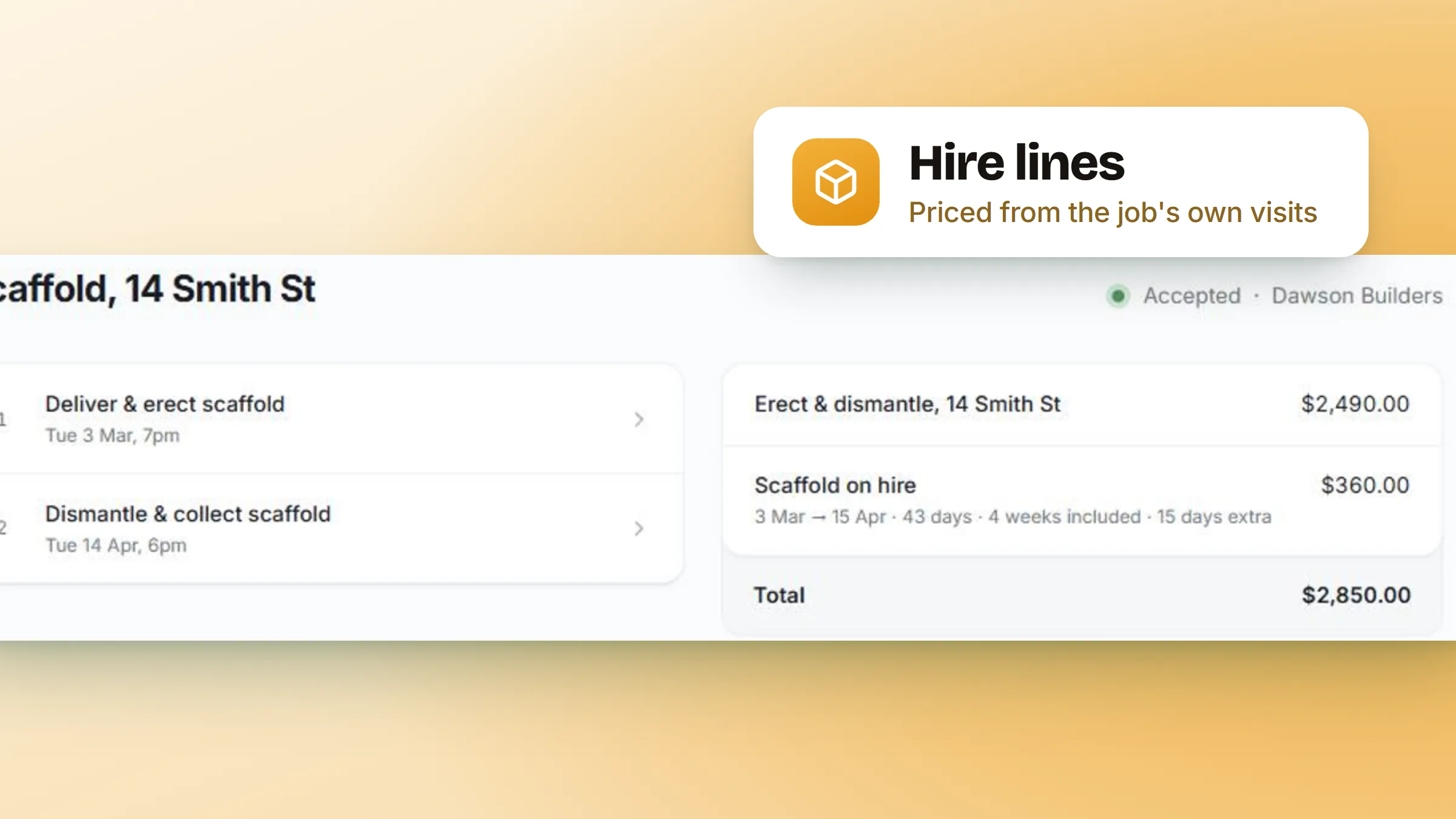
Scaffolding is the clearest case: the crew is two days of labour, and then the scaffold is standing there earning for three weeks. The weeks are the invoice, and until now the only way to bill them was to work out the dates in your head, type a number, and retype it every time the job slipped.
- A hire line on the job. Say what is on hire, how many, the period it is priced by and how long is included. The rest is arithmetic the app does.
- It brackets itself between two visits. Choose the visit it goes out on and the visit it comes back on. The quote visit is never one of them, so coming out to measure does not start the meter.
- Slip a date and the price follows. Push the strike back a week and the overage recalculates the moment the visit moves. Nothing to remember, nothing to retype.
- Charging can differ from collecting. A customer off-hires on the Tuesday and the yard collects on the Friday. Override the charge dates and the visits stay where they are.
- Quantity counts. One scaffold hides this; six portaloos, forty fence panels and a site shed do not.
What it deliberately does not do yet is hold stock. Nothing knows the kit is out, so the same gear can still be promised twice. That is the next slice.