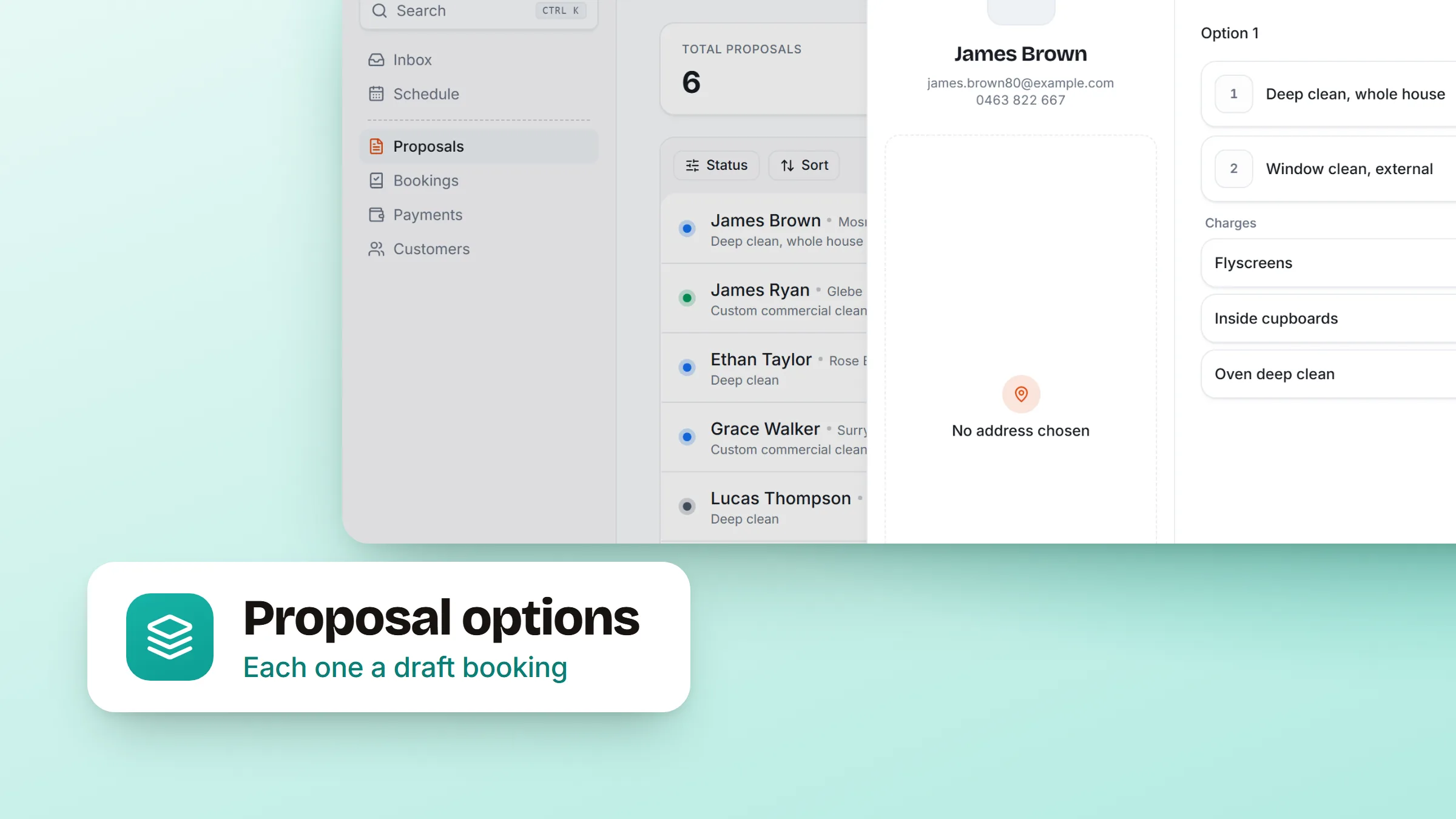
A proposal and a booking are the same thing at different stages, so they should not have been two different screens with two different rules. A proposal is now a set of options, and an option is a draft booking, built with the same composer and shown on the same panel.
- Options you can page between. Up to five, shown one at a time in a band that scrolls rather than squeezes, so a customer's choice is a choice rather than a wall.
- Start an option from one that already works. Copy the version you have built and change the one thing that differs, rather than typing the whole job again.
- The work reads as a sequence. A proposal's bookings, its gaps and its charges are worked out in one place and drawn as the run of work they describe.
- One composer for both. The thing you use to build a booking is the thing you use to build an option, on the same rail, with the same line cards, menus and named prices.
- Ask who before where. A new proposal asks who it is for, then offers the catalogue, and asks for the address once. There is no second address picker, because there was only ever one.
- An address belongs where it belongs. On the proposal by default, on a line only when that line genuinely has one of its own.
If you know how to build a booking in Bookables, you already know how to build a proposal.