A Clearer Irish Diary for Every Horsebox Run.
When a mare leaves a livery yard before breakfast, the box may be gone until evening. Reserve the journey that exists, not a tidy one-hour slot.
 Start with Google
- Yard and Eircode details together
- Journeys held for their real duration
- Regular show runs on one series
- Counties chosen for public requests
- Quotes retained with the booking
An enquiry with useful detail
Know the yard before you ring back
The owner can send their contact, service choice and Eircode while the page offers only a horsebox with room in its diary.
Learn moreEvery box on one running sheet
See the day disappear properly
Reserve the hours from the first yard gate to the expected return, and a cross-county job no longer leaves false space behind it.
Learn moreA horsebox day starts at the yard gate.
The diary must cover loading, county roads, waiting and the return. A departure time alone does not describe the work.
Reserve the complete journey
A morning collection remains busy until the expected home time, removing gaps that exist only on paper.
Bring the Eircode along
The job address and access note stay with the owner’s booking for the driver opening the yard in poor light.
Match the box to the horse
Distinct service options make the needed capacity and its price visible before staff confirm the journey.
One committed box cannot serve two owners.
The calendar removes occupied time from the booking page as soon as the run is confirmed, even far ahead.
- Interstate journey · mare in foalPer journey€1,850
- Overnight spell and handling1 night€320
- Vet certificate collectionPre-travel€140
Out and back are two jobs.
A mare going to stud and coming home weeks later is two bookings on one owner, so the return is in the diary rather than a good intention.
Built for your runs
Built for every kind of float work
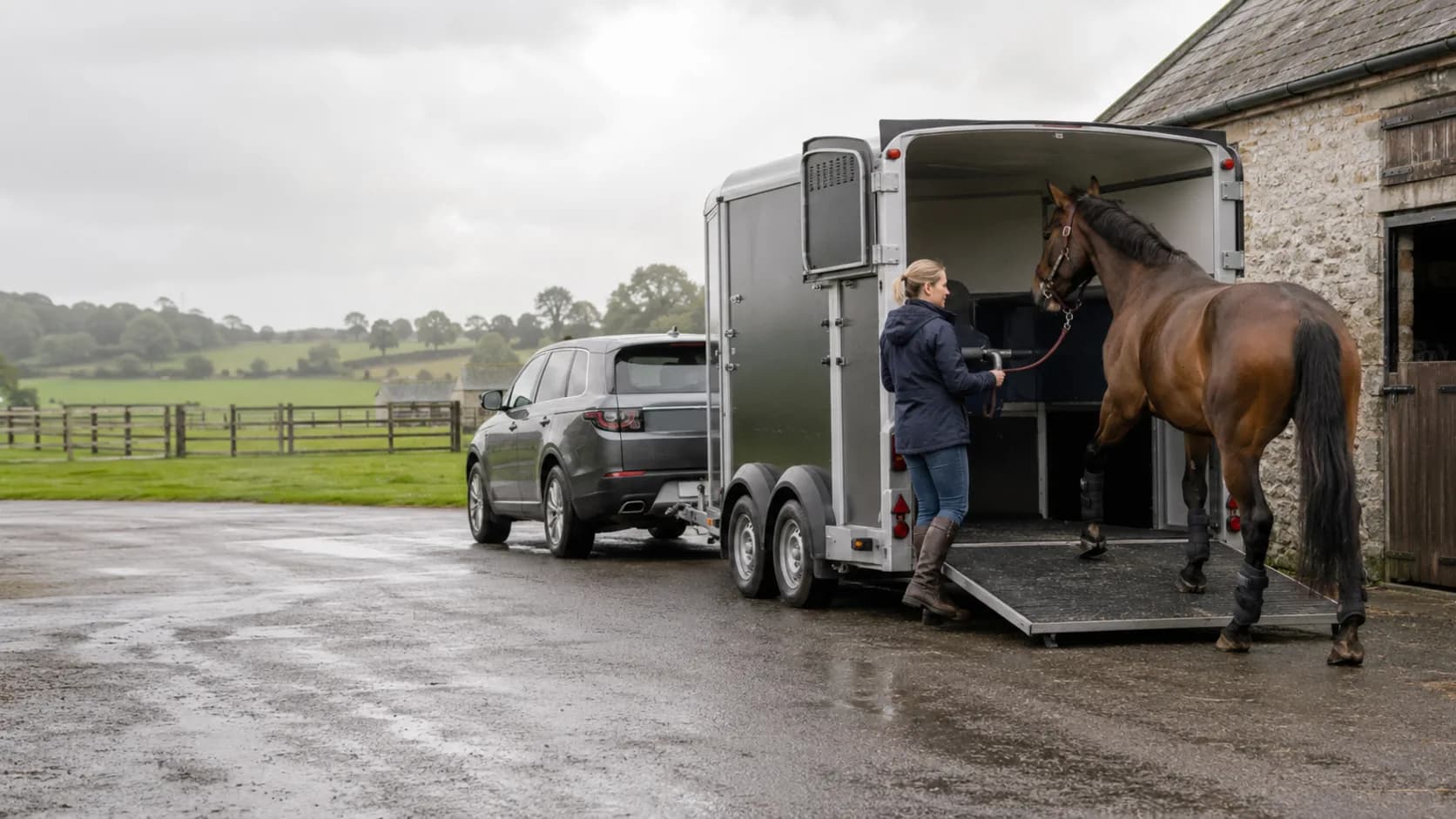
Collection from a livery yard
An Eircode, owner number and entrance note remain on the job, saving the driver from searching for the correct lane outside town.
A fortnightly lesson run
Place the regular journey on its usual weekday every second week, then end the series when the training block concludes.
The Sunday county show
Book from loading through the journey back to the yard, allowing for the programme instead of pretending the box returns at lunchtime.
The mare travelling to stud
Keep the outward journey and the later homecoming as separate work for the same owner, each with its own date and price.
A box sized for the job
Offer the single stall and larger horsebox as separate choices so the correct capacity is settled before the request reaches you.
The equine hospital appointment
Protect the fixed appointment day in the live diary and retain the clinical destination in the notes the driver sees.
Work beyond the neighbouring counties
Select the counties covered through the public page, while unusual journeys can still be entered privately after a conversation.
A price for travel and waiting
Issue a detailed quote, receive the owner’s online acceptance, and carry the agreed figures into the confirmed run.
Shape enquiries around the counties you serve.
Offer online work where the horsebox normally travels and make individual decisions on the longer requests.
Use established areas
Select county boundaries for public availability, giving owners a practical answer without an invented mileage promise.
Protect an already full week
Requests beyond those areas stay away from the live diary when the road time would make them impossible.
Keep discretion for good work
A worthwhile trip farther west can still be booked manually once you have checked the box and driver.
- Drumcondra8 counties · 2 crew
- Clontarf7 counties · 2 crew
- Dublin North7 counties · 2 crew
The accepted figure follows the run.
Agree mileage, waiting and other charges first, then record what arrives against the same customer booking.
Quote in clear lines
Separate transport from waiting or special handling so the owner sees precisely what they are accepting.
Record the bank transfer
Apply the received transfer to the correct horsebox job and keep any unpaid amount visible to the office.
Cash has a proper record
Log cash after the journey on Free, tying it to the owner and run rather than a mark in the desk diary.
- Aoife ByrneP-1011 · 25 Jun · Bank transfer€380
- Cian MurphyP-1012 · 25 Jun · Cash€240
- Niamh DoyleP-1013 · 28 Jun · Card€380
- Seán GallagherP-1001 · 27 Jun · Card€190
One app for the whole job
Everything you need to run your float transport business.
Starts free. Grows
only when you do.
Add your whole team and get booking for nothing.
As you grow with us you can go Pro.
Common questions.
Yes. Give the run its true start and finish, and customers cannot select that box anywhere inside the reserved period.
The public field-work form collects one job address. Keep any second location and route directions in the booking notes.
Choose the weekday and a weekly or fortnightly interval, then set a finishing date or total number of occurrences.
Yes. The owner can accept the itemised quote online, after which the agreed work can be converted into the diary.
Yes. Select the supported areas for public work and add a longer journey manually whenever you decide to take it.
Move the existing run to its new day and retain the same customer, notes, quoted price and payment history.