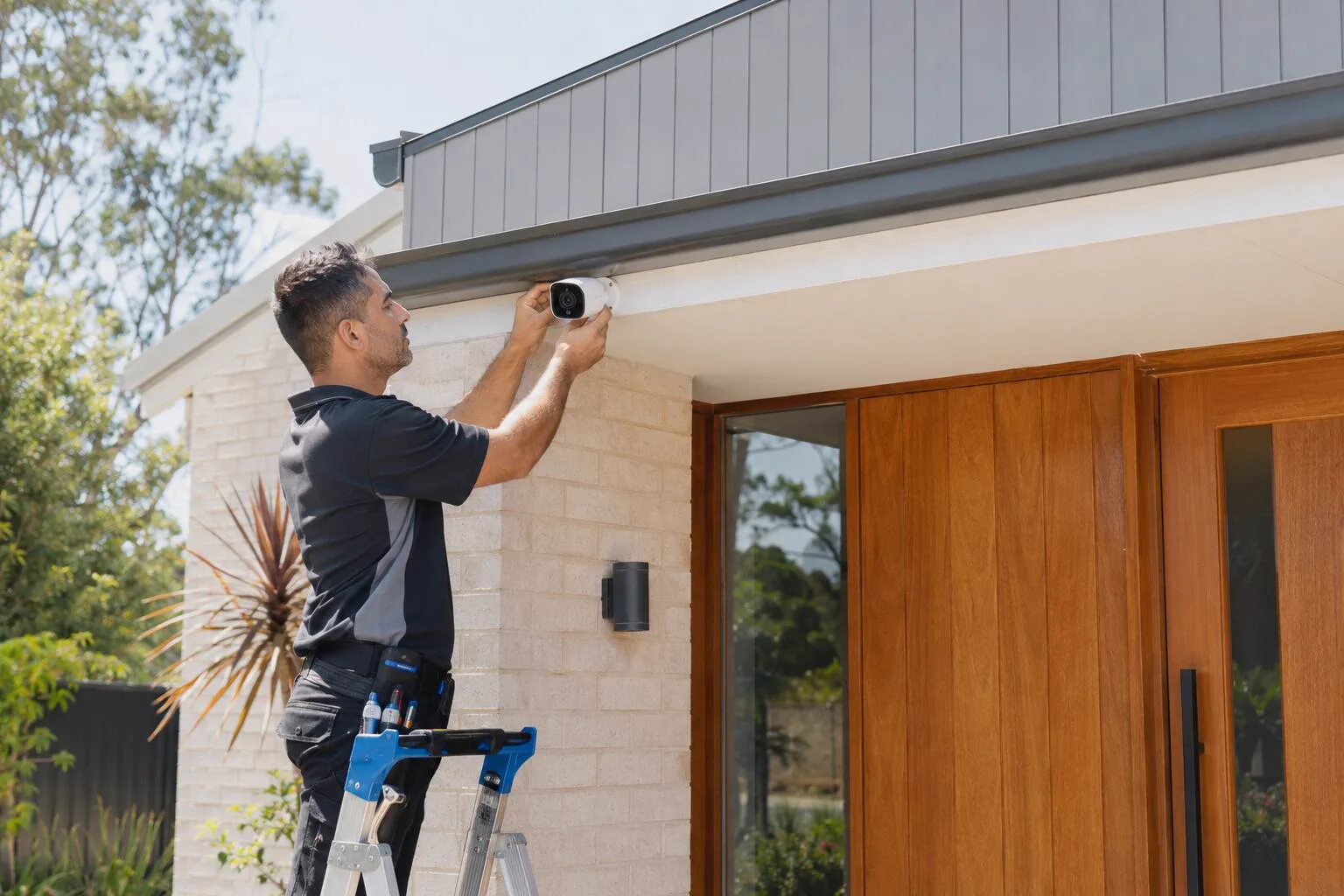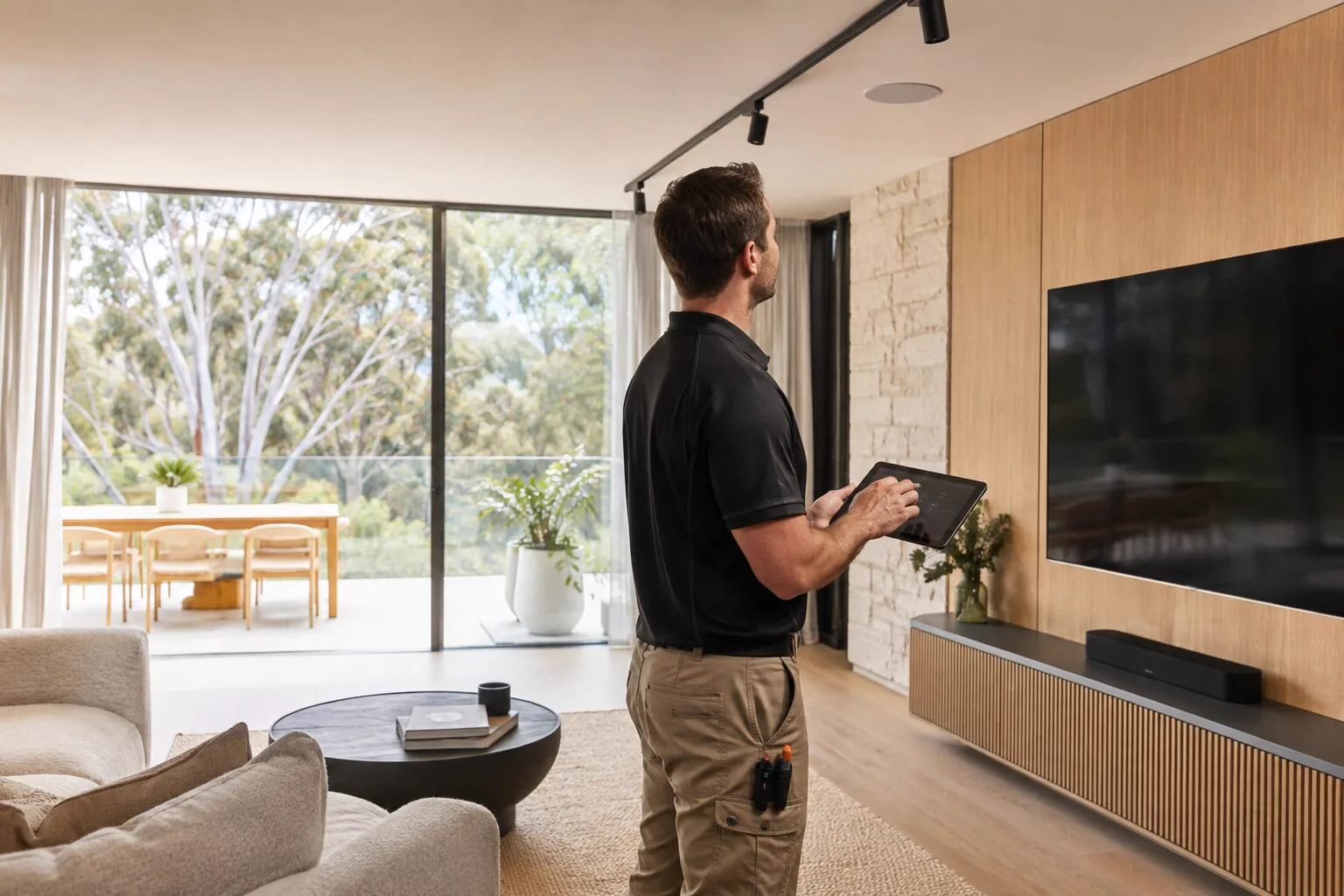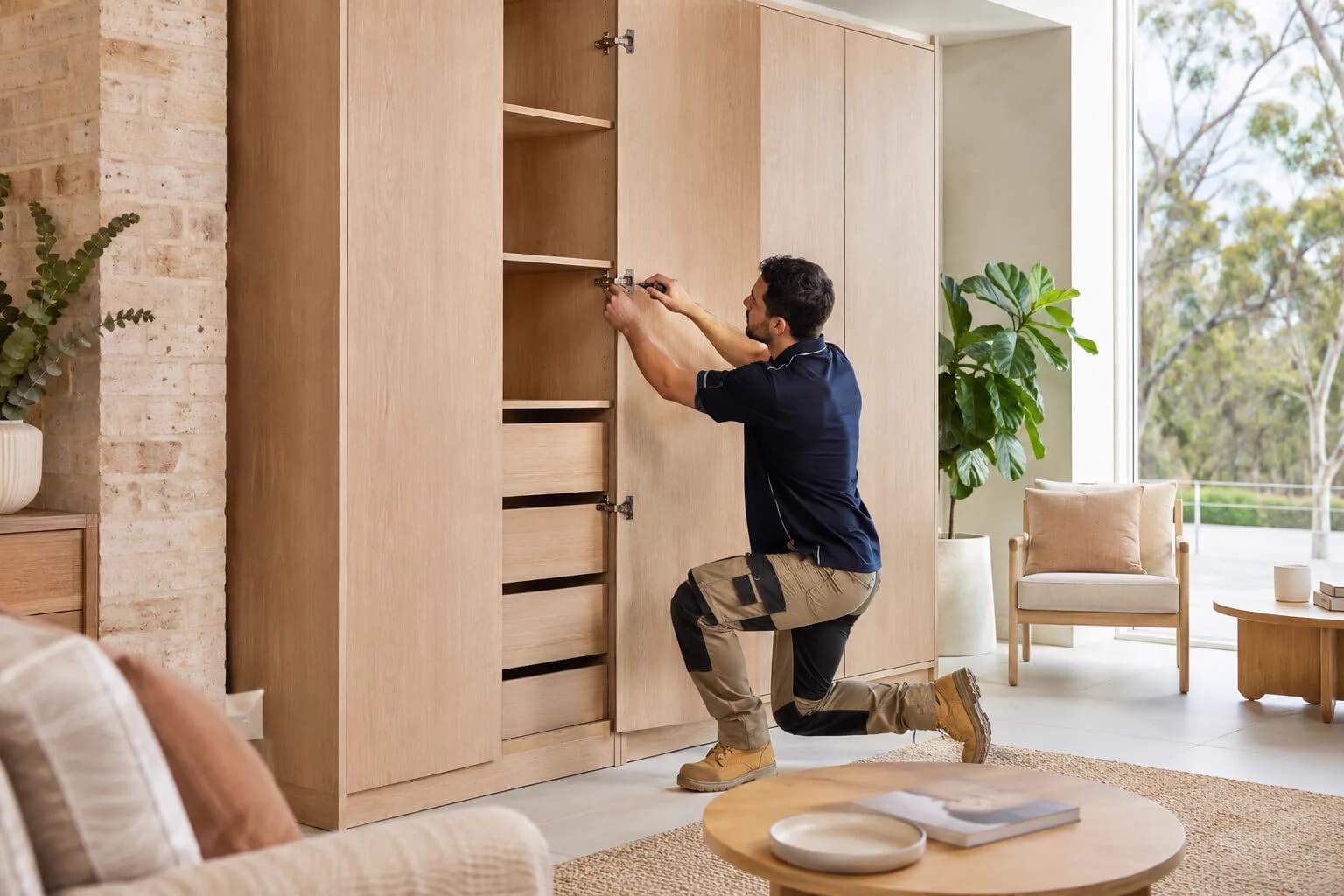
Booking software for furniture assembly in Australia.
Every build listed at the hours it honestly takes, an afternoon that stacks up instead of scattering across town, and the payment request sent while the packaging is still on the floor.
 Start with Google
- Each build type priced and timed
- Slots ranked by least added driving
- Bigger fit-outs quoted in tiers
- Payment requested at the last screw
Online booking
They book the build, not a vague hour
A bed frame, a chest of drawers, a full wardrobe system: each one its own service, its own rate and its own honest length, booked straight off your page.
Learn moreSmart scheduling
An afternoon of builds that stacks up
Six small jobs only pay if they sit near each other. Open slots are ranked by the driving each one adds to the day you have already got.
Learn moreBuilt for your trade
Built for the builds you actually get
Bedroom flat-pack runs
A bed frame, two bedsides and a chest of drawers go on as three services, so three items book three durations instead of one hopeful hour.
Wardrobe systems
Sliding doors and a full internal fit-out is an afternoon, not an hour. It books the afternoon, and the rest of the day stays true.
Furnishing after a move
A whole unit landing at once goes out as one quote with a line and a quantity per room, and converts into a booked day when they accept.
Rentals and short-stay fit-outs
An owner kitting out a whole place books hours rather than items, because nobody can count what is in the hallway yet.
Office desks and workstations
Ten identical desks is one line with a quantity on it, priced per desk, so the office manager sees exactly what the tenth one costs.
Anchoring and tip-over straps
Anything tall in a house with kids gets fixed to the wall. It is its own priced line, so it is never the thing quietly skipped at the end.
Trampolines and play gear
A trampoline before a birthday weekend books at its real length, on a Saturday you have deliberately left open for it.
Outdoor settings and BBQs
A ten-seater table and a flat-pack barbecue, built in the yard, booked at the hours two people take rather than the hours one would.
Bookcases and wall shelving
Shelving that has to hold weight is a wall fixing job as much as a build, so it carries the length that actually accounts for it.
Dismantle before a move
Taking it apart and bagging the fixings the day before the truck comes is its own service with its own price, not a favour.
The missing part return
A pack short a bracket cannot finish. The job stays open at what is done, and the return visit goes on the board for when the part lands.
An item, a length and a rate.
A wardrobe is not an hour and everybody in the transaction knows it. Sell the build at the time it truly takes, or sell the hours when nobody can count the boxes yet.
The build that cannot finish.
Half your delays are not customers. It is a delivery that did not come and a pack missing a bracket, and both need the day moved.
The whole place, quoted in three sizes.
A move-in is never one item. It is a bed, a wardrobe, a desk and eleven boxes in a hallway, and it needs a number before anyone starts.
A line, a quantity and a rate
Six dining chairs is one line with a six on it. The customer sees the per-item price and the total, and so do you when you build it.
Room by room, not one lump
Each room can carry its own line and its own address, so a landlord doing two units gets one document and two booked days out of it.
Accepted turns into the job
A yes becomes a booking carrying every line, so the day you turn up you already know what is in the hallway and what it was sold for.
Three versions on one document
On Pro one document carries three versions of the same move-in: the bedroom only, the bedroom and the living areas, or every box built, anchored and the cardboard taken away. They sign by typing their name.
- BedroomsBed, drawers, 2 bedsides$540
- Living areas2 bookcases, sideboard$320
- Anchors and straps4 tall units$160
Paid before the cardboard goes out.
The best moment to ask is while they are standing in a finished room. Once you have driven off it is a fortnight of polite texts.
Cash and transfer are free, always
Record it by hand against the build in about four taps. That costs nothing on any plan and it never has.
Cards come with Pro
Send a payment request they settle from their phone while you are flattening boxes. The receipt sends itself and the job squares off.
Big fit-outs can go in stages
On Pro a whole-house job splits into stages with their own due dates, so a week of building is not one invoice at the very end.
- Marco FerraroP-1011 · 25 Jun · Bank transfer$380
- Renee SalterP-1012 · 25 Jun · Cash$240
- Anna WhitfieldP-1013 · 28 Jun · Card$380
- Danny PrasadP-1001 · 27 Jun · Card$190
- Surry Hills8 suburbs · 2 crew
- Paddington7 suburbs · 2 crew
- Sydney North7 suburbs · 2 crew
How far you will drive for one build.
A forty minute job an hour away is not a job. The areas you cover decide what your page will accept without asking you first.
- 16 AugWardrobe systemBooked · $260
- 2 AugPayment received$1,020
- 28 JulWhole property quoteAccepted · $1,020
- 11 MarMove-in buildCompleted · $480
Everything you have built there.
A lot of this work arrives with a move, and the same address calls again: the spare room, the second unit, the thing that finally came. The history is already on the record.
It is a wardrobe, two bedsides and a desk, all delivered Thursday. Eight boxes in the hallway. Could you do Saturday?
Eight boxes called a wardrobe.
The job you cannot fit, and the job that is twice what they described, are the same problem: you need to see it before it takes a slot.
- AWAnna WhitfieldToday · 15:45Best+8 min
- DPDanny PrasadToday · 14:30+22 min
- JYJack YoungTomorrow · 09:15+35 min
The slot that adds the least driving.
Six builds a day pays and three does not, and the difference is whether they sit near each other or all the way across town.
- AWAnna WhitfieldMon–Fri · 8–5On
- DPDanny PrasadTue–Sat · 9–6On
- JYJack YoungMon–Fri · 9–5Off
The second pair of hands.
A tall unit against a wall, or a mattress up a narrow stairwell, is a two-person job. Put a second person on the booking and both are checked free for the same hours before it confirms.
Starts free. Grows
only when you do.
Add your whole team and get booking for nothing.
As you grow with us you can go Pro.
One app for the whole job
Everything you need to run your furniture assembly business.
Common questions.
Both, and most assemblers need both. A named build carries a set rate and a set length; an unknown pile of boxes is sold by the hour. On a quote each line takes a quantity and a rate, so ten desks is one line, not ten.
You see it before you accept it. A request arrives with what they typed and the address on it, so eight boxes described as a wardrobe can be sized, re-quoted or turned into a longer booking before it takes a slot.
Leave the booking open at what is done and put the return visit on the board when the part lands. The customer, the address and the lines are already on it, so nobody re-types the job.
Yes. Your page lists each build with its rate and its length and only offers slots you can genuinely make. Confirmation and reminder emails are yours to switch on when you want them.
Every service carries the length it really takes, so the wardrobe books the afternoon and the quick builds slot around it rather than underneath it.
Yes. The Free plan covers a monthly allowance of bookings with no card to start, and the plan cards on this page carry the numbers. Cards are the one part of money that needs Pro.