Booking software for Canadian pest control.
Customers book a general service at a price you set, and the exclusion work gets estimated online.
 Start with Google
- Urgent call-outs booked online
- Follow-ups locked in on site
- Treatment records against every address
- Payment collected on completion
Online booking
The mouse call books itself, at your price
Share your link and the customer picks the service and a slot, with the address and what they have been hearing attached before you roll out.
Learn moreSmart scheduling
The drive time is already in the plan
Every stop sits on one timeline with the driving between them counted, so a late call fits beside the block you are already working.
Learn moreFully booked? The job still lands with you.
When your page has no times left, the customer with a nest under the deck asks for one instead of calling the next company on the list.
A request, not a lost lead
What they want done and the times that suit them arrive in your inbox, in the thread that already holds everything else that customer has sent.
One tap makes it a job
Accept and it is on the schedule with the confirmation emailed. Decline is one tap too, and they hear back without you typing a word.
Or work it in yourself
You can still drop it into a gap between two stops on the same block. The request wins you the lead; the rest of the call is yours.
There is a nest above the back door and the kids use that door. Can anyone come today?
Drop the late mouse call into today.
Pick the job up and put it where it fits. Nothing is committed until you let go, and trying costs you nothing.
Drag it anywhere, on any plan
Send a stop to another time or another technician and the day rebuilds itself. This is not the part you pay for.
Tell your customer, or do not
With the reschedule notice on, the new time is emailed over automatically. It is off by default, because an hour either way rarely needs a message.
Nothing double-books
A slot that is taken is taken, on your booking page and on your schedule, so two houses are never left waiting on the same morning.
Or the route rebuilds itself around it.
On Pro every open slot is scored on the drive time it adds, so a late call lands on a block you are already working.
The slot that costs the least driving
Live drive times rank your open slots, so the work goes in next to the route you are already running instead of across the city.
The right route, the right technician
The address is matched to the region it falls in and to the technicians licensed for that kind of work.
Automatic routing is Pro
On Free the availability you see is identical; you place the work into the day yourself.
- PSPriya SandhuToday · 15:45Best+8 min
- JWJacob WongToday · 14:30+22 min
- CBChloé BergeronTomorrow · 09:15+35 min
The round keeps making itself.
Set a kitchen or a bakery up once as a standing arrangement and the visits are made ahead, weekly or monthly, ending never or after a set run. Moving one leaves the rest exactly where they are, and none of it is the part you pay for.
- 18 SepFollow-up visitBooked · Thu 9:00am
- 4 SepTreatment · kitchen and roof spaceDone · $260
- 4 SepPayment received$260
- 11 MarInspectionFindings kept on the property
The second visit is the one that counts.
Bed bugs, fleas and rodents are two-visit jobs, and the treatment is only finished when the return happens. Book it before you pack the gear and it sits on the address beside what you used and what you found last time.
- PSPriya SandhuMon–Fri · 8–5On
- JWJacob WongTue–Sat · 9–6On
- CBChloé BergeronMon–Fri · 9–5Off
Only a licensed hand gets the licensed work.
Every technician carries their own hours, their own days off and the treatments they are actually allowed to do, so a job is only ever offered to someone who can legally turn up and do it.
Built for pest work
From a nest by the back door to a year of servicing
General pest control visits
The cockroach, ant and spider visit takes your next real gap at a set price, with what they have been seeing attached before you show up.
Mice and rats in the fall
The first cold snap fills a week; the visits book themselves at a set price instead of arriving as thirty voicemails.
Rodent exclusion
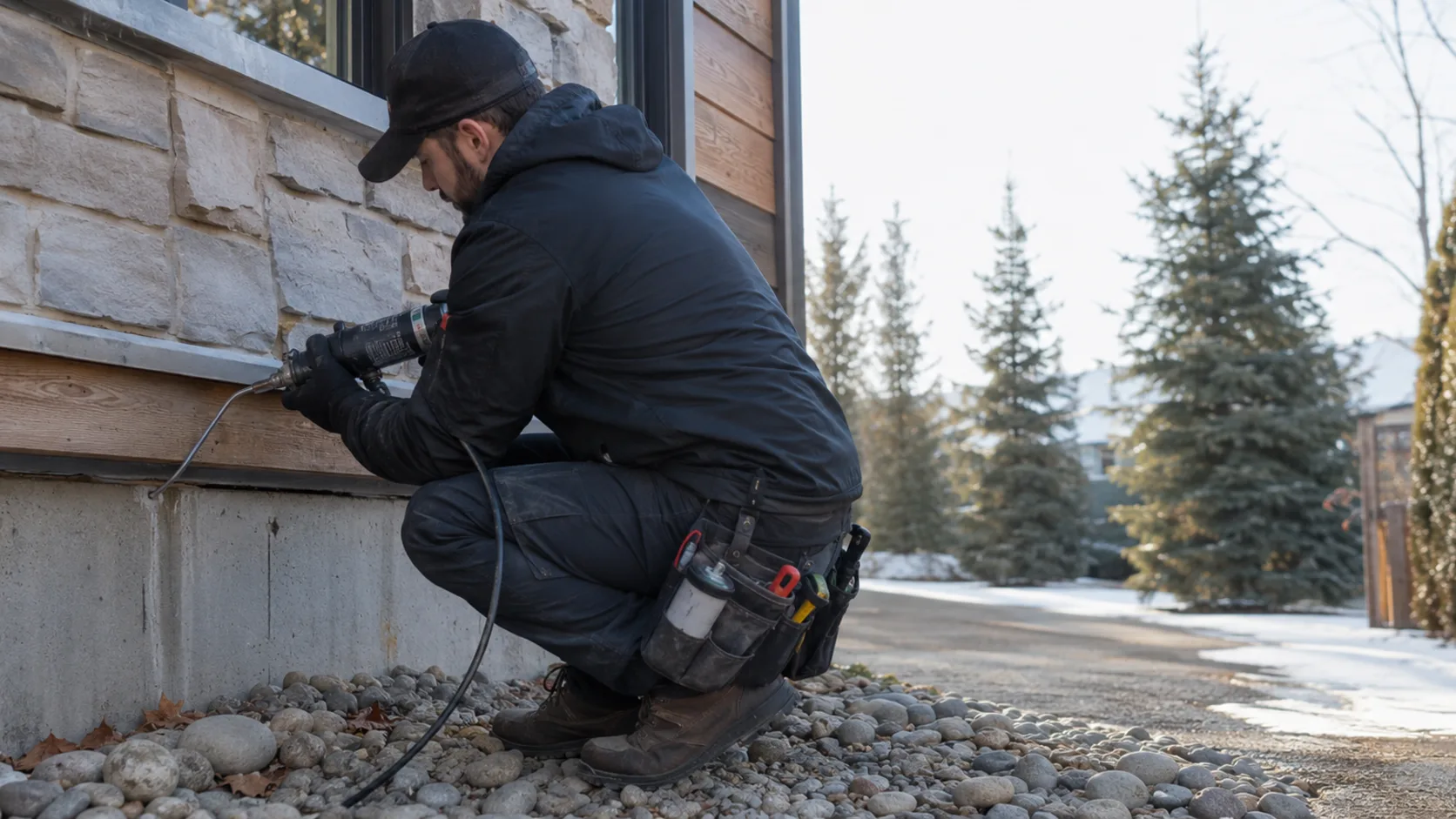
A walk-around first, then an estimate itemizing the trapping, the sealing and the roof work, since no two houses seal up for the same money.
Bed bugs in apartments
The initial and its follow-up created together, so the second visit is already scheduled while you are packing up the first.
Cockroaches in apartment buildings
A block of units treated as one job against the building, with what you did in each suite kept on that address.
Carpenter ants
A treatment and the moisture repair advice quoted together, so the customer sees why the second visit is on the estimate.
Wasps and hornets
The same-day nest call carries a set price and a short slot, so it drops between two stops that were already on the schedule.
Cluster flies in the fall
A seasonal treatment booked ahead as its own service, so the run is in the schedule before the first warm October day.
Squirrel and raccoon exclusion
The trapping visits and the roof proofing quoted together, with every return trip kept on the property rather than in a notebook.
Seasonal service contracts
Set the property up once as a standing arrangement and a year of visits is created ahead, instead of rebuilt every spring.
Property manager accounts
A manager with a book of buildings is one customer record, and each address keeps its own service history apart from the rest.
- Ryan MacLeod2mCan you come Thursday instead?
- Bookables1hA booking request needs your answer
- Priya Sandhu3hRunning 10 late on the Parkdale job
The photo turns up before you do.
Half of this job is knowing what you are driving to. Every message from a customer sits in one thread with the blurry photo of the thing under the sink, so you load the right product rather than guessing from a phone call.
- Roncesvalles8 regions · 2 crew
- Riverdale7 regions · 2 crew
- Toronto North7 regions · 2 crew
Only the regions you will drive to.
Claim the regions you cover on a map, split them across your technicians, and the twenty minute call forty minutes out never hits your schedule.
Knock it down, seal it up, or keep it gone.
The one-time service, the full exclusion and the seasonal contract on one estimate, your pick marked, so they choose instead of you selling it twice.
They choose one and sign it there
On their phone, while the droppings are still under the sink, rather than calling back next week to ask which option you meant.
The signed one schedules itself
It lands as a job against that address, priced at the option they took, with nothing keyed in a second time.
It expires when you say
Put an expiration on the price, so an exclusion you costed in June cannot be held to that number in November.
Options side by side come with Pro
Each option itemized down to the materials and the time on site, so the jump from trapping alone to a full exclusion is a number they can see rather than one you have to defend.
- InspectionWhole property$190
- Full perimeter treatmentRecommended$640
- Return visit14 days later$120
Get paid before the truck moves.
Mark it off when the cash or the e-transfer comes in, or run the card at the door and let the receipt go out on its own.
Cash and e-transfer, free
What you were paid and when, noted right on the job, on the Free plan. A lot of residential work still settles without a card ever coming out.
Cards come with Pro
Charge in full at booking, run the card at the door, or split a full exclusion into a stage now and the balance once the sealing is done.
The receipt sends itself
One is emailed the second payment clears, which is usually the end of the property manager asking you for it.
Into your own account
Paid out to your own Stripe account. Your money never sits with us.
- Émilie TremblayP-1011 · 25 Jun · Bank transfer$380
- Ryan MacLeodP-1012 · 25 Jun · Cash$240
- Priya SandhuP-1013 · 28 Jun · Card$380
- Jacob WongP-1001 · 27 Jun · Card$190
One app for the whole job
Everything you need to run your pest control business.
Starts free. Grows
only when you do.
Add your whole team and get booking for nothing.
As you grow with us you can go Pro.
Common questions.
On your own booking page. They choose the service, see the price you put on it, and take a slot you are genuinely open for. What they have been seeing or hearing is on the job before you roll out.
Yes. Itemize the trapping, the sealing and the labour, then put a single entry point and a full exclusion side by side on one estimate with your pick marked. They sign it on their phone and it becomes a job.
Yes, and it is the part most owners feel first. Set the property up once as a standing arrangement and the visits are created ahead, weekly or monthly, ending never or after a set run. Moving one leaves the rest alone.
It does, and you feel it on the second visit. The job sits on the property rather than on the customer, so the product you used, where the stations went and what you found last time are all on the address.
Yes. One customer record holds any number of addresses, each with its own notes and job history, which is how a manager running a portfolio of walk-ups actually works.
Cash and e-transfers are marked off against the job on the Free plan. Card payments come with Pro, and they are paid out to your own Stripe account rather than held by us.




Pest Control guides
All articlesOnline booking vs phone booking: which one actually gets the job booked?
Compare online and phone bookings for service businesses, with a practical way to handle standard jobs, tricky enquiries and customers who prefer a call.
ReadHow to take bookings while you're doing the actual work
Set up online bookings around your services, prices, travel and availability so customers can book while you're busy doing the job.
ReadYour booking form is not a police interview: what should you actually ask?
Choose booking form questions that help you price, schedule and prepare for the work, without making customers complete an unnecessary questionnaire.
Read