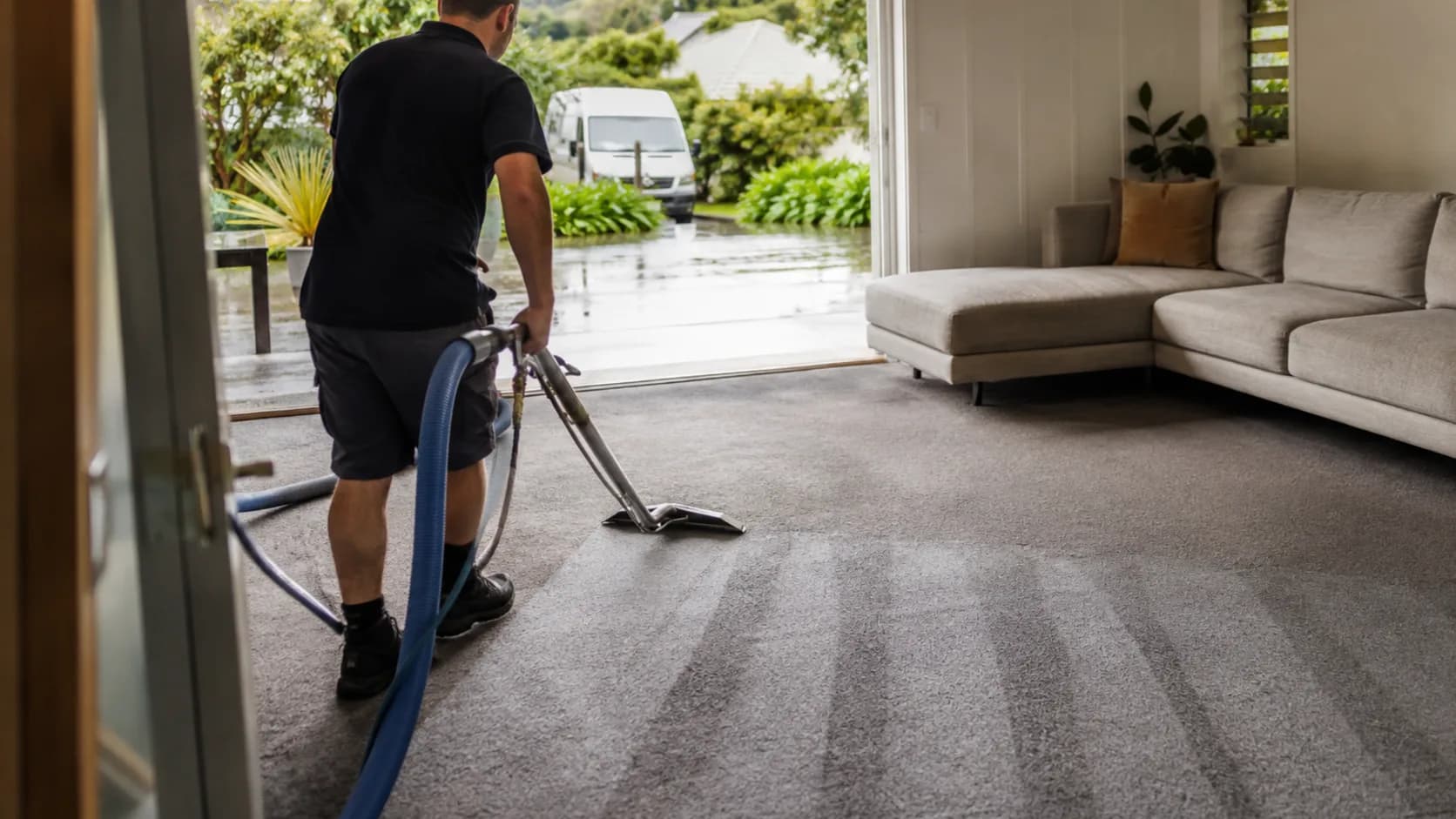
Booking software for New Zealand carpet cleaners.
Customers count their own rooms, watch the total move, and take a time your van can actually reach.
 Start with Google
- Priced by the room, up front
- Deposits hold end-of-lease slots
- Receipts emailed for the agent
- Every clean on the customer record
Online booking
Four rooms and a hallway, priced up front
They tick the rooms, add the stairs and the couch, and the total climbs while they do it. Nothing about a job this size needs a phone call.
Learn moreSmart scheduling
A week of cleans that makes sense to drive
Every job on one timeline with the travel between stops counted in, so the tenancy clean booked this morning sits near work you already had on.
Learn moreBooked out? The job still finds you.
With nothing left on your page this week, the customer asks for a time rather than scrolling on to the next cleaner.
A request, not a missed call
The rooms they wanted and the days that work for them turn up in your inbox, in the same thread as everything that customer has sent before.
Accepting makes it a booking
One tap puts it in the diary and sends the confirmation. Declining is a tap as well, and they hear back without you writing anything.
Or fit it in yourself
You can still slot a small job into a gap you know is there. The request gets you the work; the day is still yours to arrange.
Photos attached — three bedrooms, the hallway and the stairs. We have to be out by Friday, so anything at all this week?
A freshen-up, the full house, or everything soft in it.
Line the three up on one quote with your pick marked, and let the house choose rather than asking you what you would do in their shoes.
Three prices on one document, with Pro
Each option broken down to the rooms, the fibre treatment and the couch, so the step up from a tidy-up to the full job is a number they can weigh rather than one you have to sell.
Chosen and signed on the spot
They pick an option and sign it on their phone, rather than ringing back a fortnight later to ask which number was which.
The signed one becomes the job
It lands in the diary against that address at the option they chose, with not a single room re-entered by hand.
It expires when you say
Put a use-by date on the price, so a whole-house number worked out in autumn cannot be held to you come spring.
- Carpet steam clean · 4 roomsPer room$260
- 3-seat sofa & armchairUpholstery$180
- Stain & odour treatmentAdd-on$110
Paid before the hose is back on the reel.
Tick it off when the cash comes in or the transfer clears, or take the card at the door and leave the receipt to send itself.
Cash and bank transfer, free
Record what you were paid and when, on the job, on the Free plan. Most tenancy work is settled by transfer and never needed a card reader.
Cards come with Pro
Charge the whole clean as it is booked, tap the card once the rooms are dry enough to walk on, or stage a year of office visits with due dates.
The receipt sends itself
Payment clears and the customer is emailed one, so the property manager has their paperwork without you being asked for it twice.
Into your own account
Paid out to your own Stripe account rather than sitting anywhere with us.
- Hemi WalkerP-1011 · 25 Jun · Bank transfer$380
- Sarah ColemanP-1012 · 25 Jun · Cash$240
- Mere SolomonP-1013 · 28 Jun · Card$380
- James FifitaP-1001 · 27 Jun · Card$190
The room is out of use long after you have left.
A clean is priced by the rooms and sized by the minutes. Give each service the length it genuinely takes and let a treatment or a protector add its own minutes as well as its own price, and the day holds what it can really hold — because your customer loses that room until it is dry, and the next job has to be somewhere else by then.
- 14 AugWhole-house cleansBooked · $430
- 6 AugWhole-house cleans quoteAccepted · $430
- 2 MarPayment received$260
- 2 MarWool carpet cleaningCompleted · $260
Which marks lifted, and which never will.
Some stains come out and some are the carpet now, and the argument about which was which happens a year later. Every clean at that address stays on the record with the rooms, the fibre and what it cost, and the before-and-after photos go on as internal notes the customer never sees.
They count the rooms themselves.
Bedrooms, hallway, then the stairs and the sofa as extras with their own price and their own minutes. The total moves while they tick, and it was never quoted by hand.
Built for your trade
Built for every kind of carpet cleaning
End-of-tenancy cleans
The outgoing tenant ticks their rooms and books the day before handover, with the access notes on the job before you turn up.
Wool carpet cleaning
Its own service at its own price and duration, offered only to the technicians on your team who are set up to take it.
Whole-house cleans
Rooms move the total, so a flat and a four-bedroom come off one service at two prices without a quote being written for either.
Carpet moth and insect treatment
Added on at the moment of booking with its own minutes attached, so a treated house is longer in the diary as well as dearer.
Damp and mould-affected rooms
The jobs nobody costs off a photo come in as a request rather than a booking, and you set the time once you have seen the room.
Couches and dining chairs
Counted off a list at the point of booking, so the lounge is priced before the wand comes through the front door.
Mattresses and bedrooms
Sold alone or bolted onto a house clean, priced and timed properly rather than thrown in and eating the back half of your day.
Rug pick-up and return
Two visits to the one address, both sitting on the customer record beside the rug they belong to.
Office and body corporate floors
A quarterly round set up once as a standing booking, so next year is already in the diary without anyone keying it in.
Property manager rounds
One record, every property they look after, and the history of each address kept well apart from the rest of the book.
Only the areas you will actually drive to.
Claim the areas you cover on a map, split them between your vans, and work you would turn down never turns up.
Real boundaries, not a radius
Claim areas off actual district boundary lines, or take everything within a distance of a point in one sweep. An address is matched to the area it genuinely sits in.
A patch each, and the right van on it
Hold as many named areas as you work, each with its own colour and its own technicians, and a clean is only offered to someone who covers it.
Or leave it off out there
Keep the small jobs near home and let the whole-house work run further, by leaving a service out of the areas you would not tow a machine to.
- Grey Lynn8 districts · 2 crew
- Devonport7 districts · 2 crew
- Auckland North7 districts · 2 crew
The handover clean that has to be tomorrow.
Pick the job up and put it where it fits. Nothing is committed until you let go, and it costs nothing to try.
Drag it anywhere, on any plan
Move a clean to another time or another technician and the day redraws itself around it. This is not the part you pay for.
The customer hears, if you want
Turn the reschedule notice on and the new time is emailed over. It is off by default, because not every shuffle deserves a message.
Nothing double-books
A time that has gone is gone, on your page and in the diary, so two houses never land on the same afternoon.
Starts free. Grows
only when you do.
Add your whole team and get booking for nothing.
As you grow with us you can go Pro.
One app for the whole job
Everything you need to run your carpet cleaning business.
Common questions.
Off your own booking page. They tick the rooms, watch the total climb as the stairs and the couch go on, and take a time you are honestly free for. The address and the access notes are on the job before you set off.
It does. Rooms are a real price driver, so a two-bedroom flat and a four-bedroom villa come off the same service at two different totals and neither one needs a quote written by hand.
Yes, with its own price, its own duration and its own technicians, so a job on wool carpet is only ever offered to whoever on your team is trained for it.
Yes, and they can hold every property they manage on one customer record, each address with its own notes and its own history of what you cleaned there.
Record the cash or the bank transfer against the job on the Free plan, which covers most end-of-tenancy work. Card payments come with Pro, and the money is paid out to your own Stripe account.
It is. The Free plan runs a busy one-van week with no card to sign up, and takes in your booking page, quotes, the diary and your customer records. Pro adds card payments and automatic scheduling.




Carpet Cleaning guides
All articlesOnline booking vs phone booking: which one actually gets the job booked?
Compare online and phone bookings for service businesses, with a practical way to handle standard jobs, tricky enquiries and customers who prefer a call.
ReadHow to take bookings while you're doing the actual work
Set up online bookings around your services, prices, travel and availability so customers can book while you're busy doing the job.
ReadYour booking form is not a police interview: what should you actually ask?
Choose booking form questions that help you price, schedule and prepare for the work, without making customers complete an unnecessary questionnaire.
Read