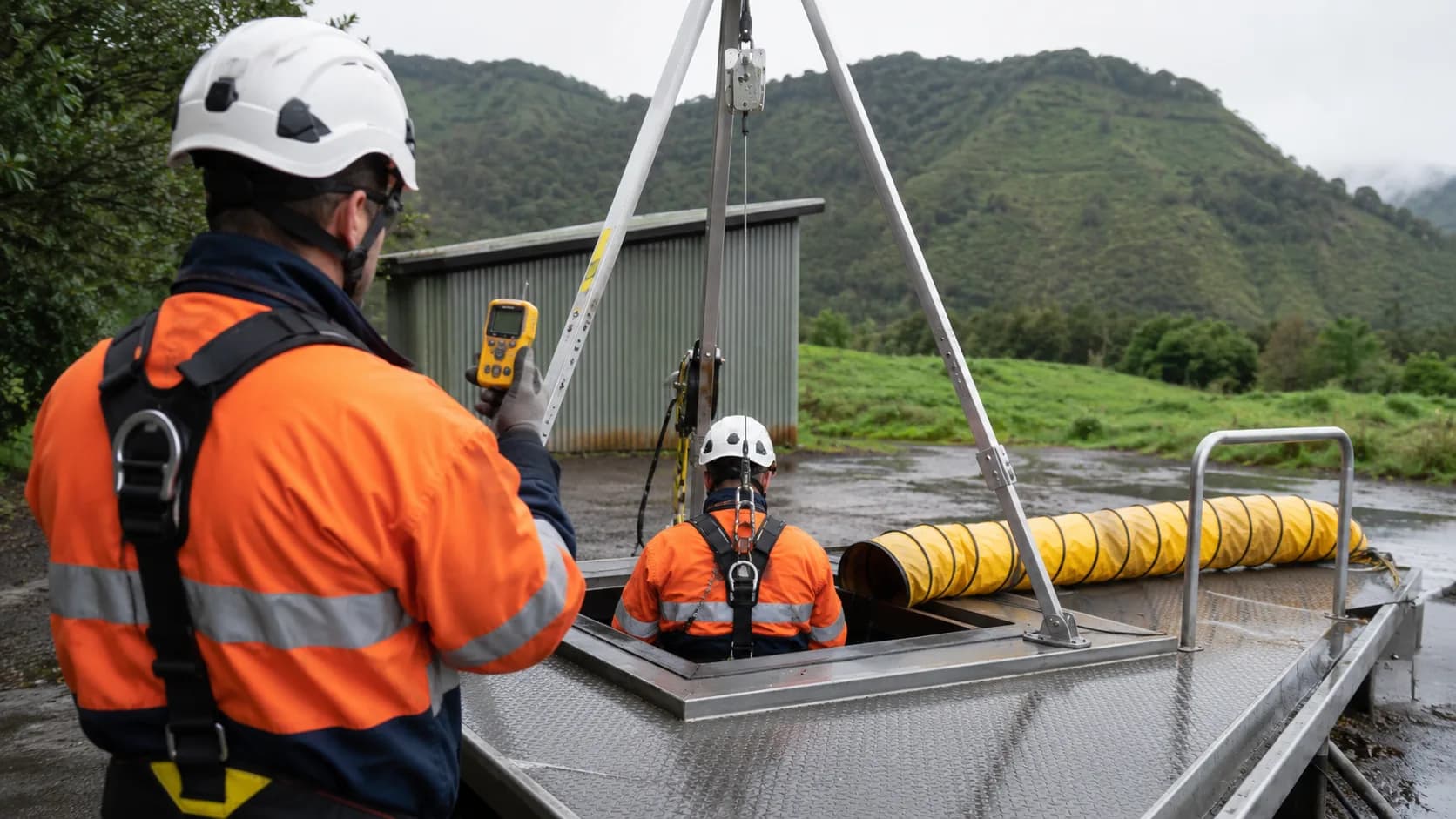
Confined Space Entry Training bookings in New Zealand.
Book public dates, practical crews and workplace cohorts without losing the trainee, the tripod and gas monitor or the payment trail.
 Start with Google
- Live training spaces
- Public and private dates
- Permit-entry simulation
- Email training reminders
- Free or Pro payments
Online enrolment
Fill the next confined space entry intake
Turn the next intake into a bookable confined space entry training with its time, capacity and delivery notes ready for individuals or crews.
Learn moreCourse diary
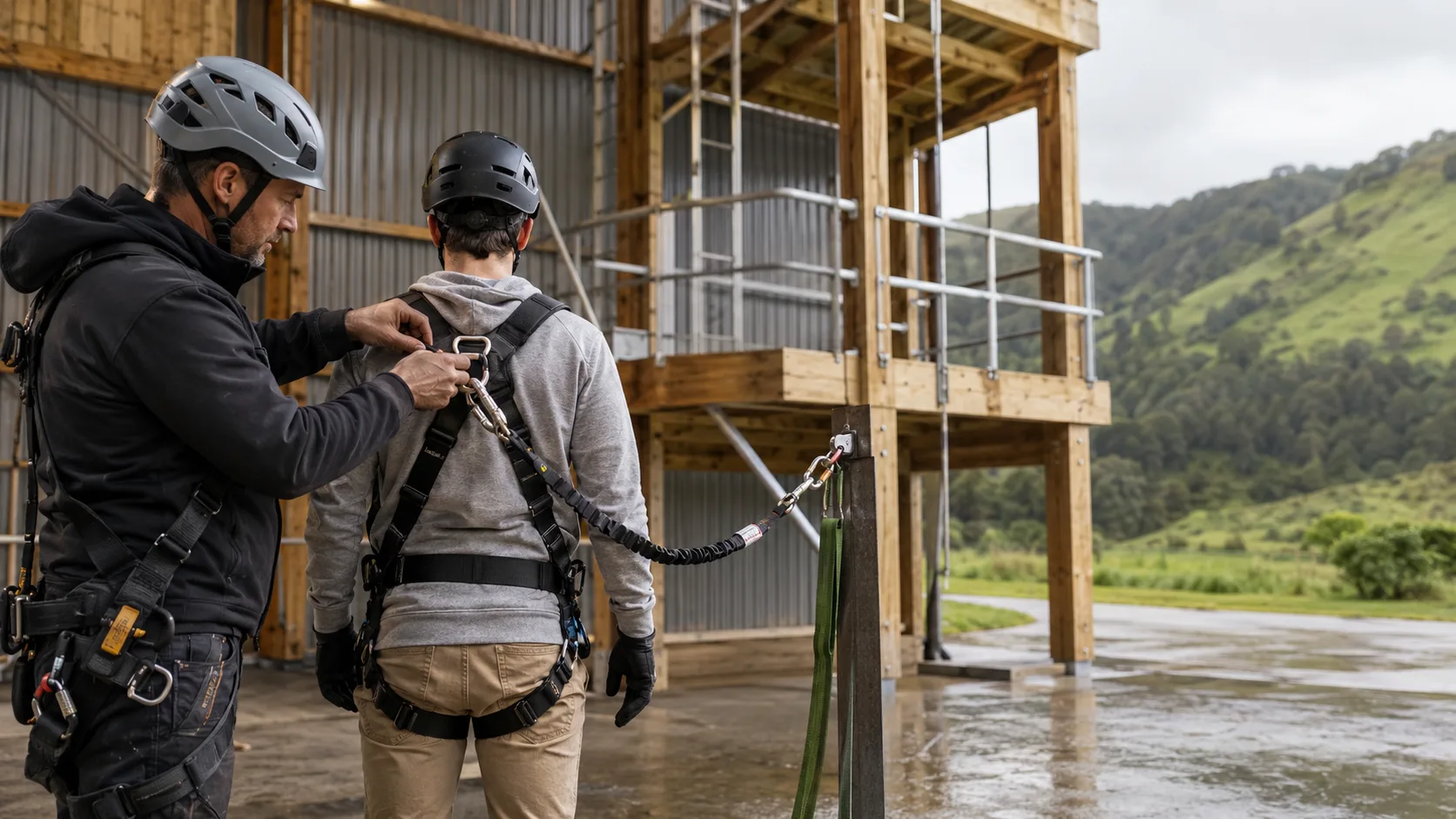
Keep the tripod and gas monitor with the intake
Keep theory, permit-entry simulation, assessment and tutor time together while you run small weekday crews and block enrolments.
Learn moreFifteen can sit through the theory. Four can go in.
The shelf of gas monitors decides the size of the course, not the room. Selling against the chairs and discovering the kit at eight in the morning is how a day gets ruined.
The monitors are the number
Places are sold against the equipment you actually own, so a cohort closes at the point the kit runs out rather than the seating.
The rig is on the diary too
The tripod and the instructor sit on the same timetable, so a second cohort cannot be confirmed onto kit already committed.
Full means full
When the last place at the rig goes, the date stops selling instead of taking a name you cannot put through the chamber.
Limited by monitors
Three tiers, three courses, not one with a footnote.
Low, medium and high risk need different kit and different days. A delegate who books the wrong one has paid for a certificate that does not cover the work, and found out too late for either of you to fix it cheaply.
Each tier is its own bookable date
The tier is chosen at booking rather than described in a paragraph somebody skims, so the wrong course is much harder to buy.
The record says which one
The tier sits on the delegate, so when the company asks what their crew holds the answer is already written down.
Refreshers know what came before
A returning delegate carries the date and tier of the last course, so the shorter refresher is booked against something real.
- 09:00Cooking classFull
- 12:15Spanish lessons11/16
- 17:30Strength & Conditioning5/12
Entrants and standby, one date.
A rescue team is often trained alongside the people going in. Two groups, one rig, one day on the diary.
- Deep clean3 bed · 2 bath$140
- Oven cleanSingle$35
- Interior windows8 windows$40
Quoted with the tier on the document.
A company day is agreed before it is held, with the tier, the instructor and the head count itemised. The version they approved stays attached to the booking, so nobody argues later about which course was bought.
Built for your training business
Built for every entry course you run
Public Confined Space Entry Training dates
List open dates with a firm space count and show what the tripod and gas monitor exercise includes before the trainee books.
Employer crew enrolments
Quote utilities, maintenance, construction and industrial crews at the provider desk, then keep names and fee on the enrolment record.
Saturday catch-up courses
Open a weekend intake for workers who cannot leave site midweek, with the tutor and tripod and gas monitor reserved together.
Theory and practical splits
Schedule classroom coverage and permit-entry simulation as one clear training day, so nobody books only half of the requirement.
Assessment-day spaces
Limit the final crew to what the provider workshop and tripod and gas monitor setup can handle, then close it when filled.
Regional delivery dates
Publish confined space entry dates for city workshops and provincial crews, with workshop time and capacity visible at enrolment.
Refresher intakes
Run returning trainees through a focused confined space entry training intake without mixing them into the wrong training level.
Short-notice vacancies
Make a late withdrawal bookable again while the remaining gas monitor space is useful, with no invented waiting-list promise.
- 09:00Cooking classFull
- 12:15Spanish lessons11/16
- 17:30Strength & Conditioning5/12
The day the rig owes you.
Open with the delegate list, the instructor and every monitor already tied to the correct cohort, rather than a sheet somebody annotated at the gate.
- Hemi WalkerP-1011 · 25 Jun · Bank transfer$380
- Sarah ColemanP-1012 · 25 Jun · Cash$240
- Mere SolomonP-1013 · 28 Jun · Card$380
- James FifitaP-1001 · 27 Jun · Card$190
Cards from one, transfers from a utility.
An individual pays by card as they book. A water company pays by transfer a month later. Both sit against the cohort rather than in two different books.
Course money stays with the enrolment.
See whether each confined space entry training fee was taken online or recorded at the provider desk.
Free keeps manual payments tidy
Record cash or bank transfer beside the trainee and gas monitor session, so the provider desk can see what was paid.
Pro takes the full fee online
Let the trainee pay the full confined space entry training fee by card at enrolment, before the practical space leaves the diary.
Private crews can start with a quote
Send a quote for the tutor, crew size and tripod and gas monitor, then confirm the workplace cohort when the details are agreed.
- Hemi WalkerP-1011 · 25 Jun · Bank transfer$380
- Sarah ColemanP-1012 · 25 Jun · Cash$240
- Mere SolomonP-1013 · 28 Jun · Card$380
- James FifitaP-1001 · 27 Jun · Card$190
One app for every booking
Everything you need to run your confined space training business.
One course place, one booking
Each enrolment takes one real training space and carries the trainee, date and gas monitor details, so full practical crews stop selling.
Email reminders
Email the start time, workshop and preparation notes before permit-entry simulation, reducing missed seats and trainees arriving without the right kit.
Starts free. Grows
only when you do.
Add your whole team and get booking for nothing.
As you grow with us you can go Pro.
Common questions.
Yes. Publish real confined space entry dates and space counts, then let each trainee choose an available intake and receive a confirmed enrolment record.
Yes. Set capacity around the tutor, assessor and tripod and gas monitor. Confirmed enrolments remove spaces, so the practical crew stops selling when full.
Yes. Create a private confined space entry cohort or send a quote, then keep the workplace, training date, trainee details and payment together.
No. Training scope, refresher needs and workplace authorisation depend on the work and local rules. State the exact training, assessment and application steps in your own enrolment description.
Yes. Email reminders can carry the start time, workshop and preparation notes for permit-entry simulation.
Yes. Record cash or bank transfer manually on Free, or take the full confined space entry fee online by card with Pro when the trainee books.