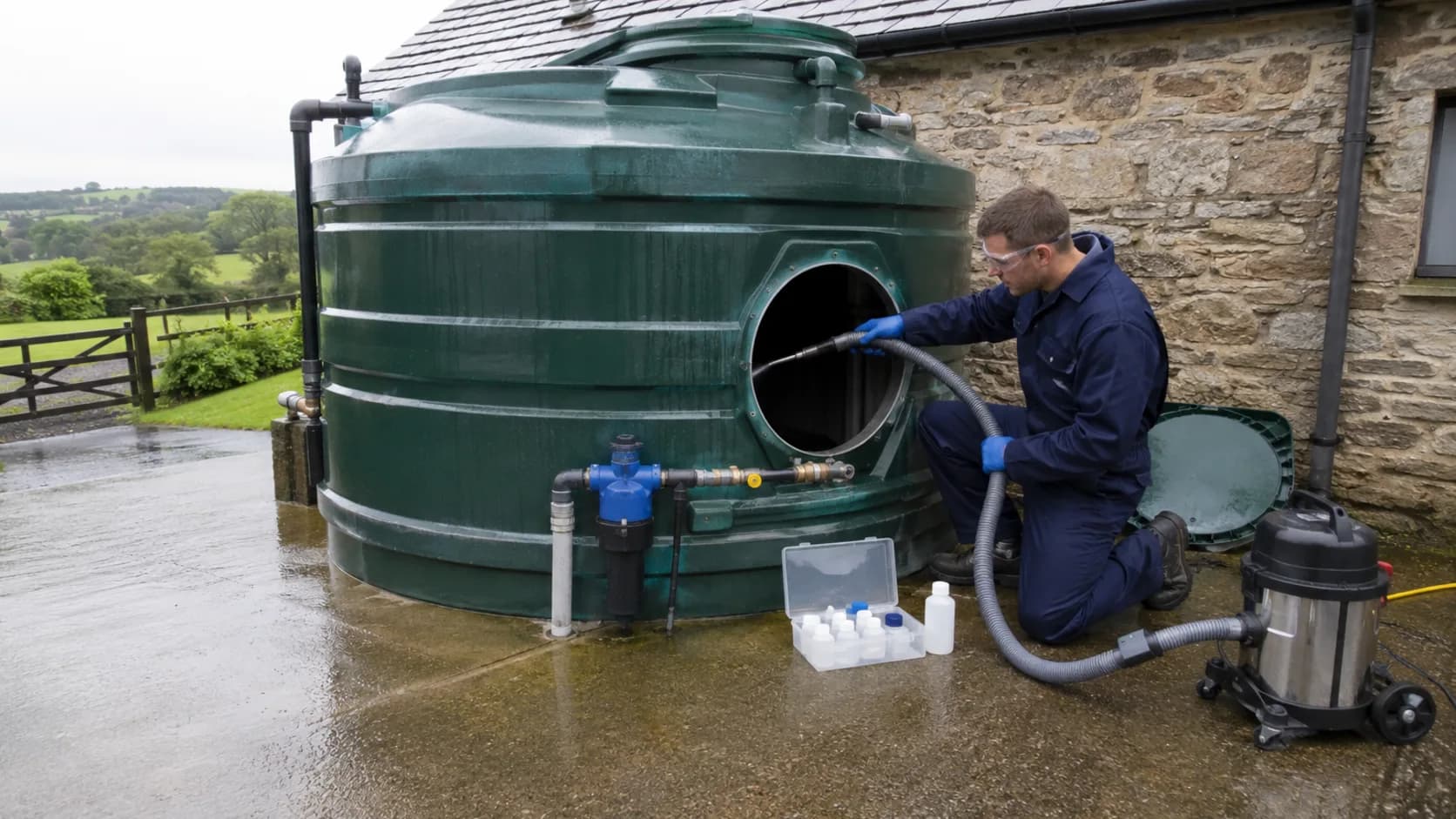
Booking software for water tank cleaning in Ireland.
An attic tank in a semi and a storage tank in a nursing home plant room are the same words on an enquiry and rather different afternoons.
 Start with Google
- Coverage drawn over the country you actually drive
- A "from" figure that routes to a callback, not a commitment
- Each tank on the property with its capacity and last clean
- The household warned it is a day without water
Online booking
A starting figure, then a conversation
The page says what a straightforward attic tank clean and chlorination starts at, and sends anything larger to you before it becomes a price.
Learn moreSmart scheduling
Four buildings, one facilities manager
Tanks arrive in portfolios rather than one at a time, and the day works far better when the four sit near each other.
Learn moreEvery tank you get called to
The same three words, and ten completely different days
Storage tank cleans and chlorination
The core of it. Drain down, clean, disinfect, refill and a written record at the end that somebody will file for two years.
Attic tanks in rented houses
Booked by a letting agent, done in a tenant’s home, so the date has to be one the occupier has actually agreed to.
Nursing homes and step-down units
Vulnerable residents, a responsible person on site and a scope written down before anybody drains a thing.
Schools and crèches
Mid-term or the summer, and nothing in between. Several buildings quoted together and done inside one week of the year.
Hotels and leisure centres
Plant room tanks that cannot come offline at dinner time. The clean is booked around the building rather than around your van.
Remedials after a risk assessment
Sediment, a lid gone missing, a tank sitting too warm. Each finding gets its own line, its own price and its own decision.
Post-incident disinfection
A positive sample or a burst that let something in. Urgent, out of hours, and never the price of a planned clean.
Wells and rural storage tanks
A house off the public supply with its own tank and pump. Long drive, different work, and its own quote every time.
Tank lining and lid replacement
The extra that turns an afternoon into a full day. Its own line, its own materials and its own visit if the tank needs one.
Annual planned rounds
The same buildings, twelve months on. The record already has the sizes, the way in and what it came to the last time.
A figure to start on, not a price to regret.
The page can show what a straightforward tank starts at and send the rest to you, so nothing large ever gets booked at small-tank money.
- Aoife ByrneBooked just now€215Accepted
- Cian MurphyOpened 2h ago€480Viewed
- The Oak CaféSent yesterday€120Sent
The quote they opened on Sunday night.
A tank clean is a real amount of somebody's money and it gets read twice before anyone replies. Seeing that it was opened is the difference between a follow-up and a nag.
Four tanks in one building, and not one of them the same price.
An attic tank, two storage tanks in the plant room and a break tank nobody mentioned. Separate lines on one quote rather than a single figure.
Size and access move the price, with Pro
Capacity, tank type and access are option groups, so a storage tank behind a locked plant room door with restricted entry moves the figure on screen while the surveyor is still on site.
Hours do the arithmetic
Time on site is a real pricing driver, so a plant room that takes an afternoon prices as an afternoon and not as the tank in the attic.
Remedials are their own lines
A new lid, a screened overflow and an insulation jacket sit apart from the clean, which is what stops a manager reading one number and querying all of it.
The quote holds its number
Document numbering is set once and never shifts, so a quote sent in January and the invoice raised in March still point at each other.
- Poly tank clean · 5,000LSludge removal€390
- Concrete tank clean · 90,000LAccess via hatch€1,150
- First-flush repairParts & labour€220
The counties the van is willing to see.
A single tank two counties over eats the day and pays for an afternoon. Draw where you work and the page holds that line for you.
Draw it, do not list it
A radius from the depot, or a shape traced over the counties you actually work, instead of listing towns you half remember.
Past the line, still asks
Outside the shape nothing books itself, though the enquiry still arrives, so a portfolio worth the mileage is yours to say yes to.
The engineers read the same map
The lad in the second van reads the same boundary, so nobody commits you to a building on the far side of it.
- Drumcondra8 counties · 2 crew
- Clontarf7 counties · 2 crew
- Dublin North7 counties · 2 crew
Mid-term is full, and the enquiries continue.
Planned tank work bunches into a few weeks of the year, and a page with nothing free loses the manager who would happily have taken March.
It arrives as a thread
It lands with the building, a rough size and the reason it was sent, which is enough to answer from the van between two jobs.
They see the honest date
The real next opening reads better than a date you cannot keep. A manager with a portfolio is used to booking a month ahead.
Free on every plan
Being on free has never held an enquiry back. What sits on Pro is the automation layered over the top of it.
Our tank has not been touched in years and the water has started tasting off. How far out are you booking?
- 2 SepTank clean · largeBooked · hatch access
- 24 AugPayment receivedBank transfer
- 11 AugThree tank quoteAccepted
- Two years agoTank clean · smallCompleted · full pump-out
The property remembers, so you do not have to.
Capacity, material, where the hatch is and what it came to last time all sit on the record, so going back is a rebooking rather than another site trip.
- Cian Murphy2mCan you come Thursday instead?
- Bookables1hA booking request needs your answer
- Niamh Doyle3hRunning 10 late on the Stoneybatter job
One thread per property, not three apps.
The quote reply, the caretaker asking whether the water will be off all day and the delivery confirmation all sit in one place you can read from the truck.
The plant room that opened an hour late.
Nobody with a key, or a tank that will not come offline until the kitchen is finished. Either way the afternoon behind it has to shift.
Drag it, the run follows
Drag the eleven o’clock and the rest of the day resettles behind it, instead of three calls made standing in a car park.
The engineers see it change
The new time is on their phone before you have put yours down. Nobody drives an hour to a building that stood the job down.
Free on every plan
Shifting work around the day is free. Filling the hole it leaves without ringing anybody is what Pro is paying for.
The opening nearest something already booked.
A portfolio is scattered across a county, so the question worth asking is which opening sits closest to a building already on the list.
Slots ranked on the driving
Every open time is scored on the travel it adds, so a site off a road you are on anyway usually takes the morning.
It ranks, you choose
It ranks and stops there. Nothing books, nothing reshuffles, and the day still belongs to whoever is holding the phone.
Pro does the scoring
Scoring open slots on the travel they add is the Pro part. Booking a tank, moving it and quoting it sit on every plan.
- NDNiamh DoyleToday · 15:45Best+8 min
- SGSeán GallagherToday · 14:30+22 min
- OKOrla KavanaghTomorrow · 09:15+35 min
Settled before the record is filed.
Payment follows the paperwork, and the paperwork usually turns up a fortnight after the van pulled away. It need not take that long.
Cash and transfer are free
Log the cash or the transfer against the job on any plan. The free plan has never stood between you and getting paid.
Cards come with Pro
Send the link with the paperwork and it tends to clear the same afternoon, which is quicker than a purchase order ever manages.
Staged, when the job earns it
A whole portfolio can carry one payment request on Pro, raised after the booking exists and never at the moment a date is picked.
- Aoife ByrneP-1011 · 25 Jun · Bank transfer€380
- Cian MurphyP-1012 · 25 Jun · Cash€240
- Niamh DoyleP-1013 · 28 Jun · Card€380
- Seán GallagherP-1001 · 27 Jun · Card€190
One app for the whole job
Everything you need to run your water tank cleaning business.
Starts free. Grows
only when you do.
Add your whole team and get booking for nothing.
As you grow with us you can go Pro.
Common questions.
Yes. Put a starting figure on the service so an agent knows roughly what an attic tank clean and chlorination begins at, and set it to route the enquiry to you rather than take a booking. A plant room tank never lands at attic tank money.
No, and it should not pretend to. The National Guidelines for the Control of Legionellosis in Ireland, published by the Health Protection Surveillance Centre, are yours to work to. What this does is hold the scope, the date and the record of what you actually did.
The building record holds last year’s sizes and the way into the plant room, so the next one is a rebooking rather than another survey. Recurring bookings keep topping themselves up, so the year rebuilds itself instead of being retyped every January.
Yes. Each tank is its own line on the quote and on the invoice, so the attic tank, the two storage tanks and the break tank nobody mentioned are all priced separately and all sit on one visit.
Cards come with Pro: send a payment link with the paperwork and it clears without a purchase order in between. Cash and bank transfer are recorded by hand on any plan, including the free one.
Two hundred bookings a month is the free ceiling, and two vans will not physically clean that many tanks. Pro is what sits over the top: card payments, options on a quote, and open slots scored on the travel they add.


Water Tank Cleaning guides
All articlesOnline booking vs phone booking: which one actually gets the job booked?
Compare online and phone bookings for service businesses, with a practical way to handle standard jobs, tricky enquiries and customers who prefer a call.
ReadHow to take bookings while you're doing the actual work
Set up online bookings around your services, prices, travel and availability so customers can book while you're busy doing the job.
ReadYour booking form is not a police interview: what should you actually ask?
Choose booking form questions that help you price, schedule and prepare for the work, without making customers complete an unnecessary questionnaire.
Read