Theatre Hire Booking Software for the UK.
A hire is the get-in, the run and the get-out, and all three hold the auditorium whether or not an audience is in it.
 Start with Google
- Live auditorium availability
- Regular company bookings repeat
- Get-in stays protected
- Full card checkout on Pro
- Get-out stays visible
Online booking
Sell real theatre availability
Offer performance days, rehearsals and dark-night hires around the auditorium diary. A confirmed show removes its full theatre block.
Learn moreOne live timetable
Keep every get-in clear
See get-in, rehearsals, performance and get-out on one theatre calendar, with the auditorium, stage and foyer clearly attached.
Learn moreThe dark days hold the stage too.
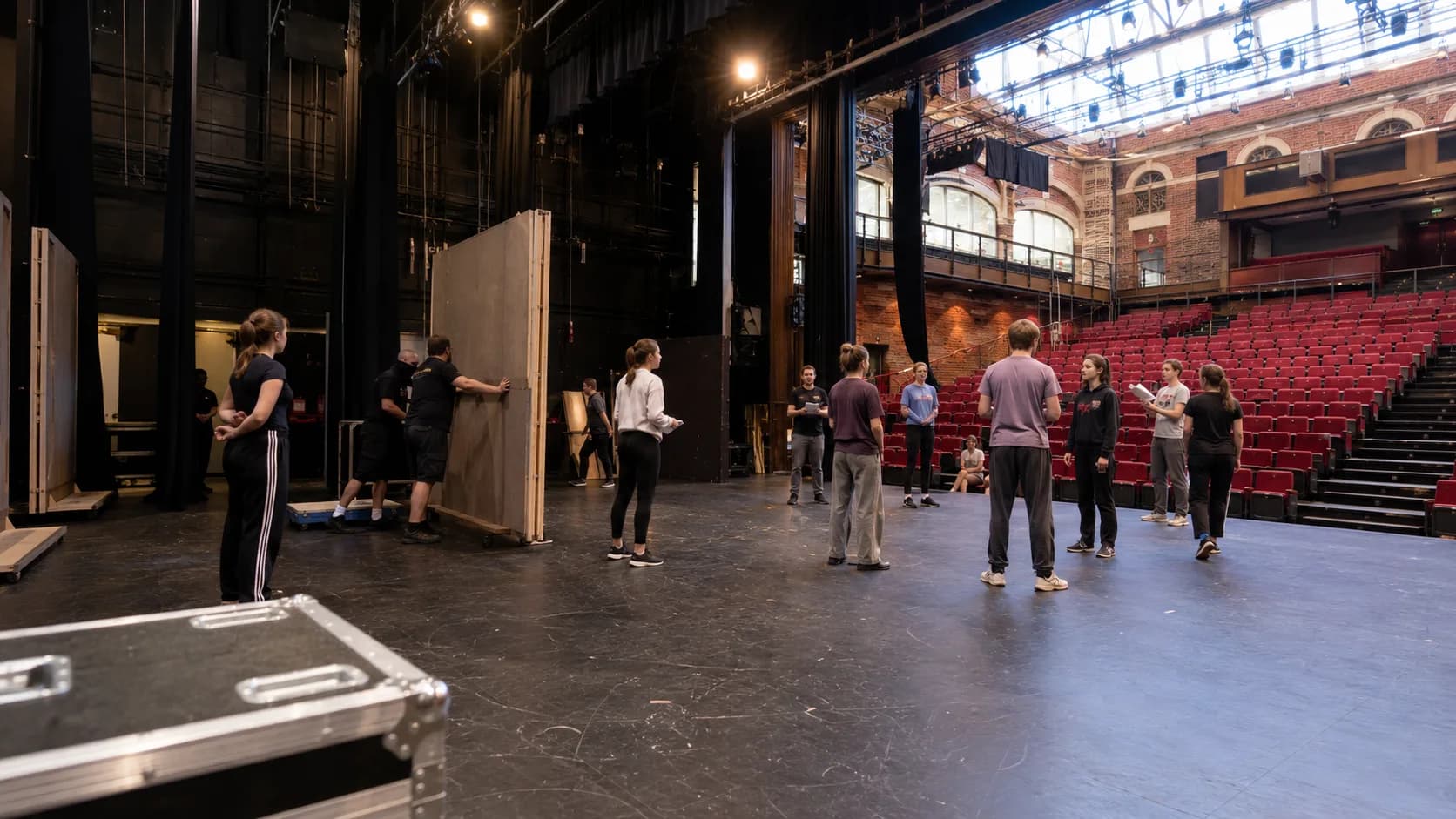
A week in the house is a get-in, a tech, the run and a get-out. Two of those days sell no tickets and every one of them makes the stage unavailable.
Load-in is part of the booking
The lorry arrives on the Monday and the set does not come down until Saturday night. Block the run and the room is committed for all of it.
One hire, many performances
A season is one booking with one hirer and one price, not five separate nights that somebody has to keep in step by hand.
Nothing lands on your get-out
The whole block leaves the page at once, so a wedding enquiry cannot be sold the Sunday morning your crew is still striking the set.
Who is on, and who is calling it.
A hire brings crew with it. The technical manager, the duty manager and the box office are all working the same week and need the same version of it.
Everyone on one week
Give each of them their own login and the week they see is the week that is booked, rather than a forwarded email from a fortnight ago.
Changes travel
Pull a get-in forward a day and it moves for everybody at once, with the company, the payment and the agreed plan still attached.
The studio stays sellable
Holding the main house does not hold the rehearsal room, so a smaller hire can still take the space nobody in the run is using.
Built for your venue
Built for every kind of venue hire
Amateur dramatic seasons
Offer the theatre time actually left; once taken, that auditorium block disappears before reception can promise it again.
Dance-school shows
Run a weekly or monthly theatre let on Free and give the recurring run a sensible final date.
Touring one-nighters
Protect the complete hire, including get-in, while useful time either side stays available.
School speech days
Attach the hirer and stage details, leaving rather less to reconstruct when the door opens.
Comedy nights
Keep the organiser and production week requirements in one record instead of the customary second email thread.
Rehearsal lets
Price a full week with the auditorium, the crew and the get-out as one itemised quote first.
A changed production week
Pull a get-in forward a day and the company, the payment and the agreed technical plan stay put.
Get-in and get-out
Take the resource offline for get-out while everything unaffected carries on booking normally.
- Deep clean3 bed · 2 bath£140
- Oven cleanSingle£35
- Interior windows8 windows£40
Nobody hires a house without a quote.
The stage, the crew, the extra get-out hours and the rehearsal room, itemised on one document the company can approve online. The accepted version stays with the booking, so what was agreed in March is still readable in October.
The venue hire fee beside the booking.
Keep payment status with the performance block, including offline money recorded on Free and complete online card checkout on Pro.
Full card payment online
Pro takes the complete venue hire fee when the performance block is booked online. Enter cash or bank transfer on Free.
Offline money stays recorded
Record cash or bank transfer manually on Free, keeping the venue hire fee visible beside the performance block.
Longer work starts with a quote
Send an itemised quote for the production week and agreed extras, then keep later payments with the accepted details.
- Gemma WhitfieldP-1011 · 25 Jun · Bank transfer£380
- Danny OkoroP-1012 · 25 Jun · Cash£240
- Aisha PatelP-1013 · 28 Jun · Card£380
- Liam DochertyP-1001 · 27 Jun · Card£190
One app for every booking
Everything you need to run your venue hire business.
One stage, one hire
A confirmed hire removes the whole run, load-in through load-out, so a second company cannot be sold the Tuesday your set is going up.
Email reminders
Email the company its stage, access time and venue notes ahead of scenery, cast or instruments reach the loading entrance.
Starts free. Grows
only when you do.
Add your whole team and get booking for nothing.
As you grow with us you can go Pro.
Common questions.
Yes. Your public page shows genuinely open theatre time and removes the selected auditorium when the booking is completed.
Yes. Repeat the same theatre weekly or monthly on Free, ending on a chosen date or after the final planned booking.
Yes. Pro takes the complete venue hire fee when the performance block is booked online. Enter cash or bank transfer on Free.
Yes. Close the exact window needed for get-in or get-out while every unaffected resource remains available.
Yes. Set every auditorium up as a separate resource so a confirmed booking removes only that resource and time.
Yes. Itemise the longer production week and agreed extras, send the quote and keep the accepted version with the booking.






Theatre & Auditorium Hire guides
All articlesFully booked? How to keep the lead without promising the impossible
Handle enquiries when your diary is full with clear requests, alternative times and a practical manual waiting list that avoids double bookings.
ReadHow much booking notice should you require?
Choose a booking lead time that allows for preparation, staff and travel, with practical examples for mobile services, venues and classes.
Read