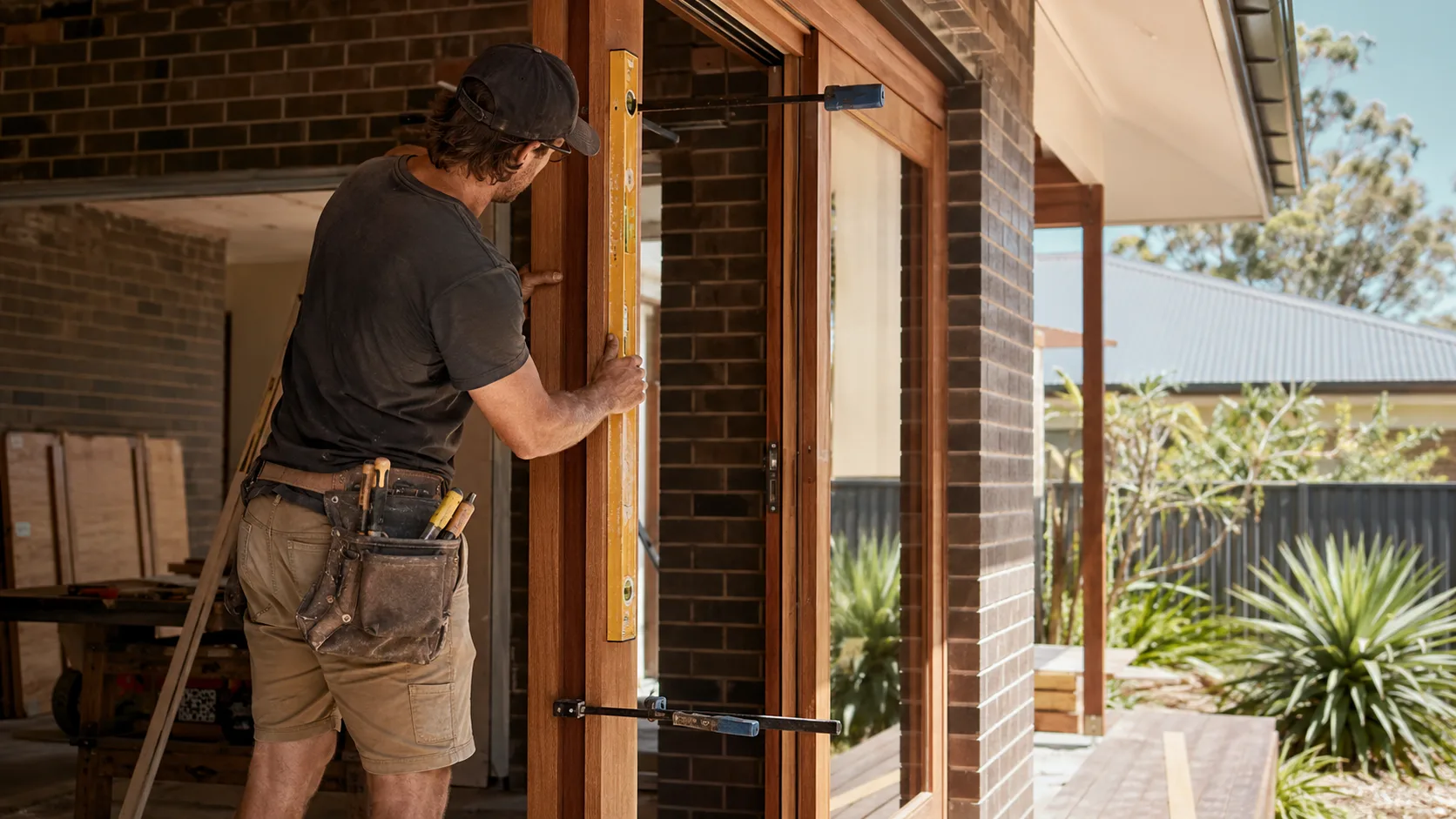
Booking software for carpenters across Australia.
A deck is four days, a door repair is forty minutes, and both have to fit the same week. Quote them, book them and get paid without the notebook on the dash.
 Start with Google
- Tiered quotes signed from a phone
- Accepted quotes become booked jobs
- Repairs booked online with true durations
- Card payment requests at handover
Online booking
Small jobs book themselves in
Sticking door, blown weatherboard, a gate that needs rehanging. Give them a real duration on the site and they land between the deck and the pergola.
Learn moreSmart scheduling
A four-day deck is one block
Bearers and joists Monday, boards Tuesday and Wednesday, balustrade Thursday. One block, so nobody books a kitchen install on the Wednesday.
Learn moreThe work is booked in weeks, not hours.
Framing days, boarding days, a fit-out that eats a Thursday. A carpentry diary is read across weeks, so the honest question is never what time you are free — it is which week is still open.
When the week is already full.
Carpentry books out in weeks, not hours. Once the days are gone the page stops offering them and asks instead.
No slot you cannot work
If the deck has eaten Tuesday to Friday, nothing on those days is offered. The calendar is the only thing that decides.
The enquiry still lands
They leave the job, the address and a photo of the rot instead of ringing the next chippy on the list.
Quote it when you get in
It sits in the inbox with the detail already attached, so the evening quote takes four minutes rather than a callback.
Photos attached. Happy to wait for a week that suits you — how far out are you booking at the moment?
How far you will drag the trailer.
A deck two hours out is a job. A door repair two hours out is a loss. Draw the areas you work and the site holds the line for you.
Drawn, not guessed
Mark the suburbs on a map. Anything inside can book, anything outside gets the enquiry form instead.
Different rules, different work
You will drive further for a week of framing than for a sticking door, and the areas can say so.
A boundary, not a fee
Areas decide where you work, nothing else. There is no extra money added on for a longer drive.
- Surry Hills8 suburbs · 2 crew
- Paddington7 suburbs · 2 crew
- Sydney North7 suburbs · 2 crew
A back deck, quoted three ways.
Every deck enquiry is the same: how big, what timber, does the old one come out. One estimate carrying treated pine, merbau and spotted gum options.
Let them pick the timber, with Pro
Pro: option groups. Balustrade or none, one step or three, oil or leave it raw. Each carries a price difference and the total moves as the client ticks, so the number they accept is the number you invoice.
Quantities and rates, not one number
Square metres of decking, lineal metres of balustrade, days of labour. The client can see where the money is going.
One address per line
The deck at home and the pergola at the beach house on one estimate, each line carrying its own address when it books.
Numbered once and left alone
Estimate numbers are set behind a confirmation and never move, so what your accountant sees matches what the client kept.
- Spotted gum decking · 18m²Supply$2,700
- Subframe, bearers & joistsLabour$1,450
- Lay, fix & oil2 days$1,850
Built for your trade
Built for every kind of carpentry and joinery
Hardwood decks
Quote by area with the timber as an option, book the framing days and the boarding days as one block.
Pergolas and patios
Posts, beams and roofing on their own estimate lines, so the client can see what dropping the roof would save.
Built-in robes
Priced per run with shelving and hanging as options, booked as a two-day fit once the client signs off.
Kitchen and cabinetry installs
The cabinetmaker delivers, you fit. Book the install against the delivery date and keep both on the same job.
Door hanging and repairs
A forty-minute job that books itself into the gap between two bigger ones instead of costing you a phone call.
Skirting and architraves
Second-fix work priced by the room, so a three-bedroom refit is a number you can send from the driveway.
Weatherboard repairs
Rot cut out and replaced. Quote it hourly with a materials line, because nobody knows what is behind it yet.
Stairs and balustrades
Setout, treads and handrail as separate lines, with the compliance work on the estimate rather than a surprise.
Timber framing and extensions
Book the whole run of framing days at once and keep the builder in the same thread as the owner.
Fences and gates
Priced per metre off a site photo, booked in the half-day it takes, paid before you pack the ute.
Shopfitting after hours
Fitouts that only happen once the doors shut. Book them at the hours the centre allows and price the night rate in.
The forty-minute job books itself.
A sticking door or a gate that needs rehanging is too small to quote and too easy to lose. Put it on your page with its own price and its own length and it lands in the gap on its own.
- 11 AugHardwood decksBooked · $6,000
- 2 AugHardwood decks quoteAccepted · $6,000
- 17 JulPayment received$420
- 17 JulDoor hanging and repairsCompleted · $420
The address remembers the timber.
Every deck, robe and rehung door at that property on one record. When they ring three years later about matching the boards, you are reading what you actually used rather than guessing.
When the timber does not turn up.
The merbau is a day late, the slab is not cured, the sparky is still in the wall. The day moves and everything downstream moves with it.
Drag it, do not retype it
Move the block to Thursday and the whole run of days shifts. On any plan, including the free one.
Everyone sees the same day
Your leading hand opens the app on site and reads the same calendar you are looking at in the yard.
The client is told once
The change goes out on the job thread, so the owner is not left standing in an empty backyard at seven.
Paid before you pack the ute.
Most carpentry money still arrives as a transfer, and recording that by hand is free and always will be. Cards are the part that comes with Pro.
Cash and transfer, free
Mark it paid on the job and it is done. No fee, no plan, no waiting for a payout to clear.
Cards on Pro
Send the link from the driveway. The repair is paid before you have loaded the drop saw.
Stage the big ones
Staged payments are Pro: ask at frame-up and again at handover. They go out after the job is booked, never at checkout.
- Marco FerraroP-1011 · 25 Jun · Bank transfer$380
- Renee SalterP-1012 · 25 Jun · Cash$240
- Anna WhitfieldP-1013 · 28 Jun · Card$380
- Danny PrasadP-1001 · 27 Jun · Card$190
Starts free. Grows
only when you do.
Add your whole team and get booking for nothing.
As you grow with us you can go Pro.
One app for the whole job
Everything you need to run your carpentry business.
Common questions.
No. This is job software, not a regulator. Whether you need a trade licence depends on your state and the value of the work: Queensland has a carpentry class issued by the QBCC, other states set their own thresholds, and anyone carrying out construction work needs a white card. None of that changes how you quote or book a job here.
Yes. Book the deck as a block across the days it actually takes and the calendar shows it that way, so a Wednesday enquiry hits the following week instead of landing on top of your boards day. Move the block and every day moves with it.
That is the normal path for anything bigger than a repair. Send the estimate with framing, decking, balustrade and stairs on their own lines with quantities and rates. Nothing goes in the calendar until the client accepts it and you pick the week.
On Pro you build option groups: treated pine, merbau or spotted gum, each carrying its own price difference. The client chooses on the estimate and the total moves with them, so you are not rewriting the quote three times.
Cash and bank transfer you record by hand, and that costs nothing at all. Card payments come with Pro, which is what turns the door repair into money before you have swept up the shavings.
Yes. Staff get their own login and see the jobs they are on. Pricing, client records and the money side stay with whoever runs the business.


Carpentry & Joinery guides
All articlesOnline booking vs phone booking: which one actually gets the job booked?
Compare online and phone bookings for service businesses, with a practical way to handle standard jobs, tricky enquiries and customers who prefer a call.
ReadFully booked? How to keep the lead without promising the impossible
Handle enquiries when your diary is full with clear requests, alternative times and a practical manual waiting list that avoids double bookings.
ReadBooking deposits: enough to make it real, not a hostage negotiation
Choose booking deposits that fit your work, explain the balance and cancellation terms, and understand how deposits differ from refundable security bonds.
Read