Booking software for damp specialists across New Zealand.
A moisture survey with a price on it, a repair quote the owner can read in tiers, and the timber given the months it needs to dry.
 Start with Google
- Inspections booked from your page
- Tiered quotes with expiry dates
- Signature to booked job, automatically
- Full history kept against the property
Online booking
The moisture survey books itself, at a price
Every damp job starts with readings and a torch under the house. Put that survey on your page with a price and owners take a morning themselves.
Learn moreSmart scheduling
The re-line date, set months in advance
Wet framing dries on its own clock. Book the strip-out and the re-line the day the quote is signed, so the second visit is not a note somewhere.
Learn moreThe one thing that can book itself is the survey.
A damp job cannot be quoted down the phone, and pretending otherwise loses the wall to whoever answers first. So the survey carries a price and a length, and the owner takes a morning without a single call back and forth.
Priced before they book it
The survey fee sits on the page next to how long you will be there, so nobody is surprised by an invoice for looking at a wall.
Into a gap that is actually free
They pick from the mornings you have left, not from a form that promises a callback you then have to make.
Everything after it hangs off that job
Readings, photos, the report and the quote all land on the same record, so the address has one story rather than four.
Booked out a fortnight, still enquiring.
Damp does not wait for your diary. When there is no survey slot left this month the page says so and takes the job anyway.
The enquiry lands as a thread
Name, address, which room and a photo of the mould in one place, so you can judge the urgency instead of playing phone tag.
Answer once, from the job
Reply from the record rather than your texts. What you told them in March is still sitting there when they ring back in June.
Slot them the moment one frees up
A cancelled survey is a gap you fill from the same screen, and the confirmation email does the telling for you.
Tide mark up the hall wall and the plaster has gone soft. Is there anything at all before the end of the month?
Built for your trade
Built for the walls you actually get called to
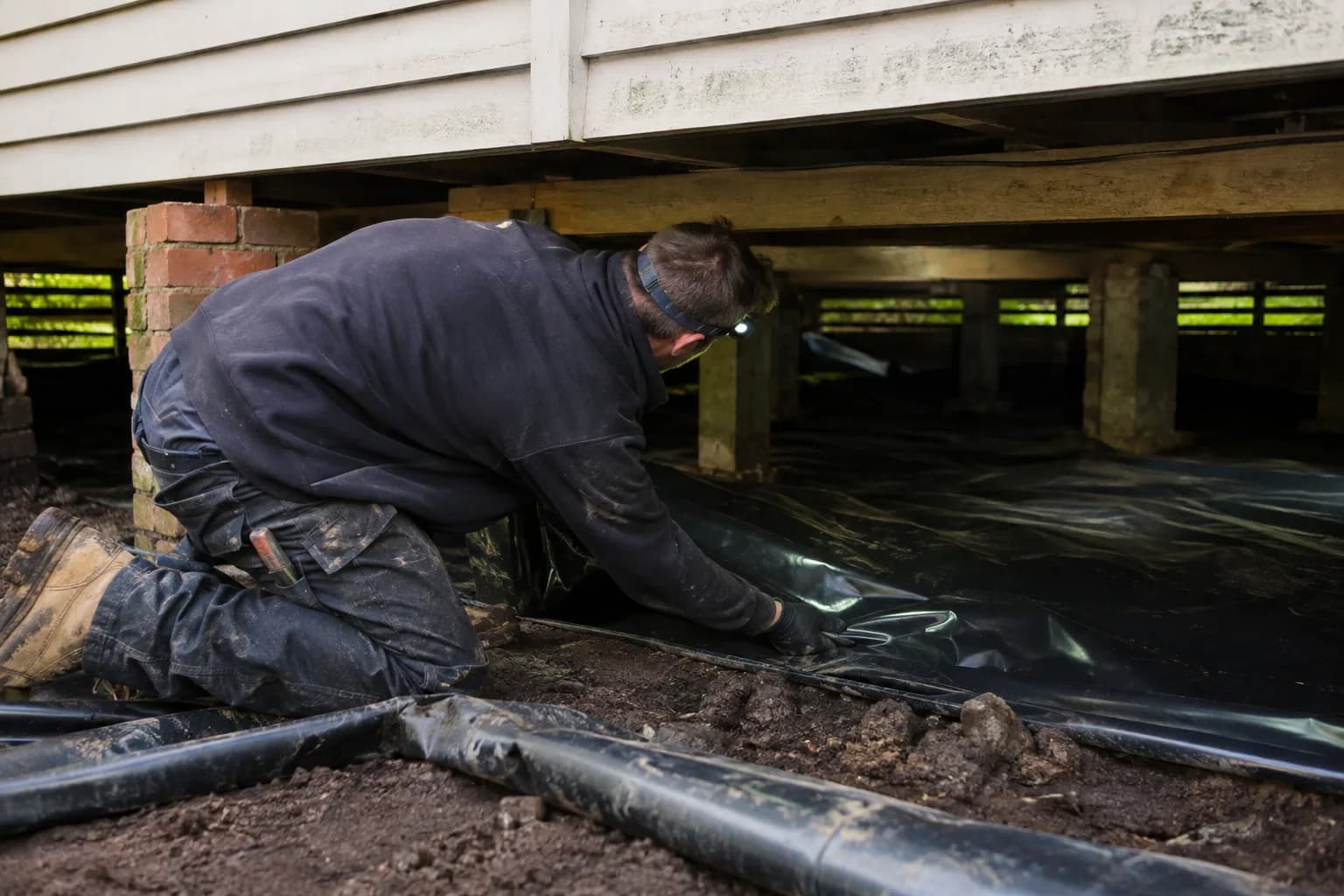
Subfloor damp under a villa
Readings taken at a set price, the crawl space quoted in tiers, and the return visit booked before you climb back out.
Ground vapour barriers
Laid by the square metre as its own line, with vents and a fan sitting under it as options the owner can tick or leave off.
Borer in floor joists
Treatment booked straight off the accepted quote, with the affected bays and the readings you took filed against the address.
Wet framing behind cladding
Invasive checks quoted separately from the repair, so nobody is pinned to a number before the cladding actually comes off.
Condensation and mould in bedrooms
Extraction, underfloor insulation and a follow-up reading quoted together, so the owner sees the whole fix rather than the cheapest bit.
Rotten piles and bearers
Priced per pile as separate lines, so when the owner queries the total you can show which part of the floor it came from.
Pre-purchase moisture checks
Booked into a real gap before the deadline, priced up front, and filed on the address for whoever ends up owning the place.
Rental portfolio checks
Four houses surveyed in one run, each with its own job record and its own quote, all going back to the one property manager.
Follow-up readings
The return reading is a booking, not a reminder you carry. Move it a week if the timber is not ready and the owner hears about it.
- Hemi WalkerBooked just now$215Accepted
- Sarah ColemanOpened 2h ago$480Viewed
- The Oak CaféSent yesterday$120Sent
Which reports were opened, and which went quiet.
A damp quote sits on a phone next to two others for a fortnight. Seeing what has been read and what has been signed makes the one worth a call obvious.
A job that lives in stages, not in a morning.
Surveyed in July, signed in August, injected in September, dry by December. The stage a job is in is more use to you than the hour it starts.
Damp under a villa with a low subfloor.
Three ways to price the same crawl space: vent it properly, vent it and lay a ground barrier, or lift the floor and replace the bearers.
Priced off what you measured under there
Barrier area, vent count and pile repairs are separate lines, so when the owner queries the number you can point at where it came from.
The tiers sit side by side
Vent it, barrier it, or lift the floor. The owner reads all three on one page instead of waiting on three separate quotes.
Sent before you are out of the driveway
The quote goes from the phone while the overalls are still on, which is usually before the next outfit has rung back.
Extras priced as options · Pro
A second row of vents, a powered fan, borer treatment to the joists, another few metres of barrier. Tick one and the quoted total moves, so nothing gets re-typed on the tailgate. Priced options come with Pro.
- Damp course injection · 14 lmSupply$1,540
- Cut out & replaster wallsLabour$1,860
- Salt-neutralising render & finishMaterials$700
Timber dries on its own schedule.
A wet bearer is not something you can hurry along. Put the return visit on the board now and stop carrying it in your head.
The return visit is a real booking
Book the re-line for October while you are still under the house in July. It sits on the month like any other job.
Drag it when the timber is not ready
If it is still reading wet, move the visit to the following week and the owner is told without you writing an email about it.
The house keeps its own history
Every survey, reading and repair stacks on the address, so five years later the story of that floor is one search away.
Paid for the survey, paid for the floor.
Damp work is two payments months apart. Record cash and transfers by hand for nothing, or take cards on Pro.
Cash and transfer are free
Mark the survey paid when the transfer lands. That costs nothing on any plan and it always will.
Cards come with Pro
Send a card link for the survey fee, and another once the floor is back down and signed off.
Split the repair across stages
Part on the strip-out, the rest once the timber is dry. Staged requests come with Pro and go out after the job is booked.
- Hemi WalkerP-1011 · 25 Jun · Bank transfer$380
- Sarah ColemanP-1012 · 25 Jun · Cash$240
- Mere SolomonP-1013 · 28 Jun · Card$380
- James FifitaP-1001 · 27 Jun · Card$190
Starts free. Grows
only when you do.
Add your whole team and get booking for nothing.
As you grow with us you can go Pro.
One app for the whole job
Everything you need to run your damp proofing business.
Common questions.
Yes. Put the survey on your page with a set price and a length and owners pick a morning. Pricing the repair still waits until you have been under the house.
Build it in lines: ground vapour barrier, extra vents, pile and bearer repairs, timber treatment. Send the tiers together so the owner picks the level of work.
No. Bookables holds the job, the readings you noted against it and the quote you sent. Any report you write for the owner or their lawyer stays yours.
Yes. The return visit is a booking like any other, so it sits on the month from the day the repair is signed. If the framing still reads wet, move it a week.
Cash and bank transfer you record by hand are free on any plan and always will be. Card payments come with Pro. The plan cards further down carry the numbers.
Yes. Add the team and each person sees their own day, while whoever runs the office sees the lot without being handed the money screens.



Damp Proofing guides
All articlesOnline booking vs phone booking: which one actually gets the job booked?
Compare online and phone bookings for service businesses, with a practical way to handle standard jobs, tricky enquiries and customers who prefer a call.
ReadFully booked? How to keep the lead without promising the impossible
Handle enquiries when your diary is full with clear requests, alternative times and a practical manual waiting list that avoids double bookings.
ReadBooking deposits: enough to make it real, not a hostage negotiation
Choose booking deposits that fit your work, explain the balance and cancellation terms, and understand how deposits differ from refundable security bonds.
Read