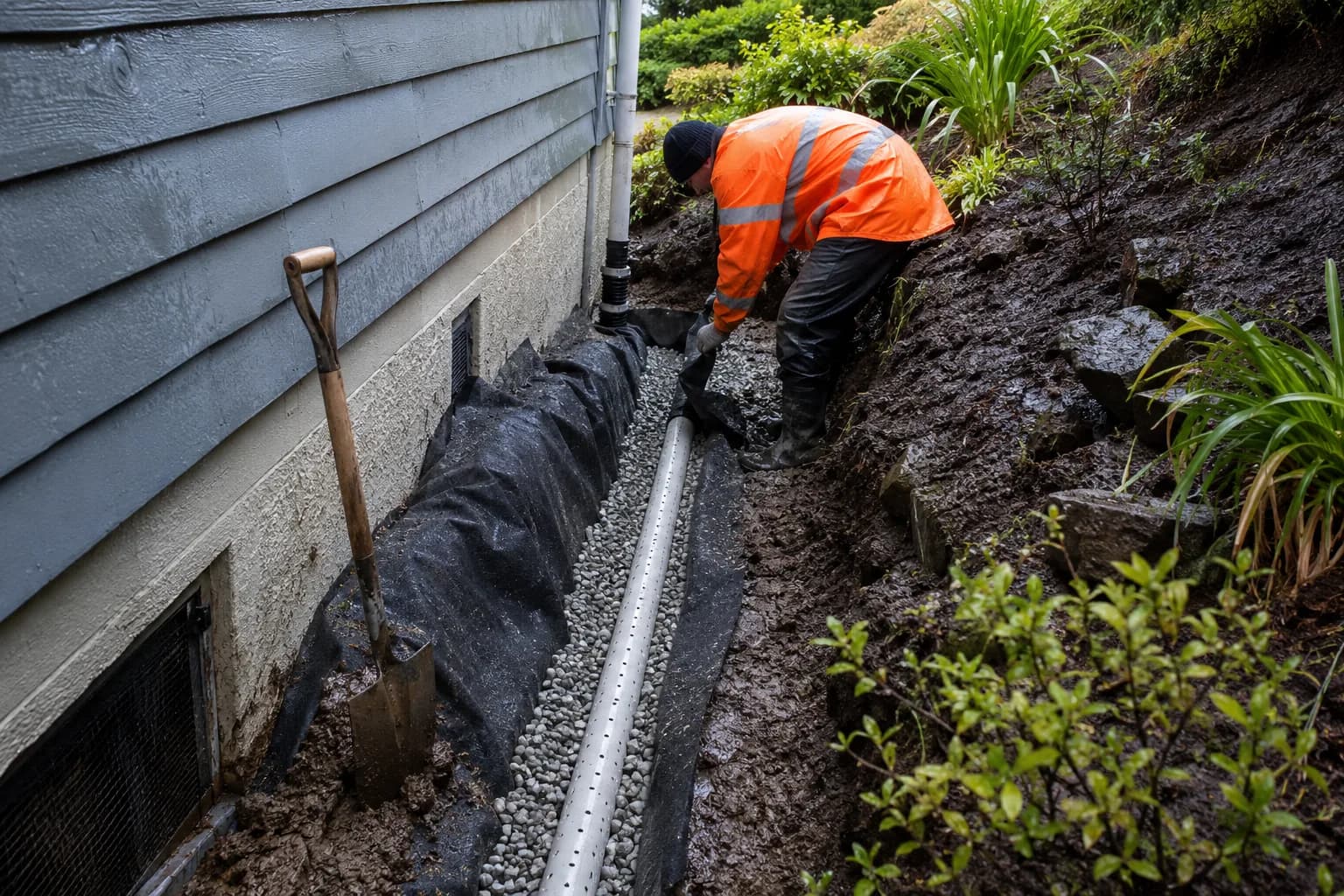
Booking software for New Zealand drainlayers.
From the gully trap overflowing in the rain, through the CCTV run and the reline quote, to the invoice paid before you leave the driveway.
 Start with Google
- Same-day blockages, nearest tech first
- CCTV inspections booked online
- Repair quotes signed and auto-converted
- Every visit on the property record
Online booking
A blocked gully books itself while you dig
Callouts, camera runs and drainlaying sit on a page with your real hours. The customer takes a time while you are still shovelling.
Learn moreSmart scheduling
Move one urgent job, not the whole afternoon
Drag the overflow into the gap between two stormwater jobs. The crew sees it before the gear is loaded and nobody has to ring around to explain.
Learn moreThe choke that rings before you have opened the gate.
Sewage does not wait for office hours. Your booking page takes the callout at your attendance rate and puts it in the run before anyone has picked up a phone.
Attendance charged, then the hour
Set what turning up costs and what the hour after it costs, so the price is settled before the chamber lid is off.
The photo comes with the job
What is coming up the gully, where the chamber is, whether the truck will get down the side. On the booking, not in a text you lose.
Out of hours is a different price
Bookable hours are the ones you actually answer, and an emergency rate is an option on the service rather than a second business.
When two days of rain fills the week.
Drainage arrives in weather. The phone goes at once and your page has nothing on it, which is the moment people ring the next name down.
Booked reads as booked
No slots left says so plainly, so the customer asks to go on the list rather than assuming you have shut.
Urgent still gets through
A surcharging line comes in as a message with the address and the photo, and you answer it between jobs.
The flat week after fills itself
Camera runs and quotes that can wait book into the following week, so the dry spell is not empty.
Drain in the back yard is overflowing every time the toilet flushes. Can anyone come today?
- 18 AugPipe relining quoteSent · $2,800
- 16 AugCCTV drain surveyCompleted · $290
- 3 JunBlocked gully trapsPaid · $260
- 11 FebBlocked gully trapsCompleted · $240
The same junction, for the third time.
Two clears and a camera run against one address. That history is what turns a cut-the-roots-again call into a lining quote they say yes to.
The day changes by ten in the morning.
One clear turns into a dig and everything behind it shifts. That is the job, and the calendar should move with it.
- Grey Lynn8 districts · 2 crew
- Devonport7 districts · 2 crew
- Auckland North7 districts · 2 crew
How far the truck really goes.
The map says forty minutes. With a tanker on the back and spoil to shift, it does not.
- Hemi WalkerBooked just now$215Accepted
- Sarah ColemanOpened 2h ago$480Viewed
- The Oak CaféSent yesterday$120Sent
The quote that lands after the next storm.
Nobody signs off a reline the day they get it. See which ones have been opened, and which address is one wet week away from ringing you back.
Every job on the truck
From a blocked gully to a new connection
Blocked gully traps and overflowing wastewater
Books as an urgent callout with an attendance charge and an hourly rate after it, so the price is agreed before the lid comes up.
CCTV drain surveys
A short fixed-price booking with the report as the thing you sell. The repair quote goes out against the same customer record.
Hydro jetting and root cutting
Priced by the hour with an option for the heavier nozzle on old earthenware, which is most of the country.
Pipe relining
Quoted as metres of liner, junction reinstatements and prep on separate lines, so a long quote still reads on a phone.
New drainlaying and connections
Multi-day work quoted in stages, with council paperwork and site notes kept on the job rather than in the glovebox.
Stormwater, sumps and downpipe connections
A half or full day booking with an excavation option group, quoted after the site visit rather than over the phone.
Subsoil and section drainage
Priced by the metre with a depth option, which is an option group with a price change rather than a new service.
Septic tank and treatment system servicing
Recurring bookings on a service interval, so the next one is on the calendar before you leave this one.
Pre-purchase drainage reports
Fixed price, tight window, and the report goes back through the thread the agent or the buyer started.
Storm damage and flooded sections
The work that arrives all at once. Urgent jobs come through as messages with the address and photo already attached.
One blocked line, three straight answers.
Clear it now, camera it and cut the roots, or replace the section that fails every winter. One good, better, best estimate, not three.
The while-we-are-here options, with Pro
Pro adds option groups: after-hours attendance, a second access point, spoil cartage, or a heavier jetting rate for old earthenware. Each carries its own price change on the estimate they already opened.
Built from what you measured
Metres, hours and units with rates behind them. Change the length and the total follows instead of being retyped.
Out before you drive off
The camera comes out of the pipe and the quote goes from the ute, which is when they are most likely to say yes.
One number, once
Estimate numbers are set once behind a confirm, so two versions of the same quote cannot end up with the same number.
- Cured-in-place liner · 6mSupply$1,850
- Excavate & expose junctionLabour$540
- Reinstate & CCTV verify3 hrs$410
Pro: the slot that adds the least driving.
When someone books a camera run, the open times get ranked by how much extra driving each one adds to the day you already have.
Ranked, not rearranged
Nothing already booked moves. The better times just sit higher on the page the customer sees.
Suits long gaps between jobs
A drainage day is a few long jobs with a lot of road between them, which is where ranking pays.
Driving is not a charge
Distance changes which slot is offered first. It never quietly changes the price they are given.
- MSMere SolomonToday · 15:45Best+8 min
- JFJames FifitaToday · 14:30+22 min
- ARAna RangiTomorrow · 09:15+35 min
Paid before you coil the hose.
On drainage work you are either paid at the pit or chasing it for a fortnight, and the difference is whether they can pay while you are there.
Cash and transfer cost nothing
Mark it paid on the job and it is recorded. Free on every plan, permanently.
Cards come with Pro
A link they tap in the driveway, with the receipt landing against the booking rather than in a notebook.
Long jobs bill in stages
A week of drainlaying can be split across stages once the booking exists. Pro, and after the job is on the calendar.
Paid into your account by Stripe.
One app for the whole job
Everything you need to run your drainage business.
Starts free. Grows
only when you do.
Add your whole team and get booking for nothing.
As you grow with us you can go Pro.
Common questions.
No. Registration and annual licensing for drainlayers sits with the Plumbers, Gasfitters and Drainlayers Board, and that is between you and them. Bookables holds the job, the quote and the money, and your licence details go on your own documents.
Estimates are structured lines with a quantity and a rate, so a run of new pipe reads as metres, bends, a sump, hours on the machine and reinstatement, each priced. AS/NZS 3500 work described line by line is easier to say yes to.
Book the site visit or the CCTV inspection as the bookable thing and quote off the back of it. The visit sits on the run sheet as a real job, and is not billed as the work itself.
Your bookable hours are whatever you actually answer. An after-hours rate is an option on the service, so a Sunday callout prices differently without you keeping two sets of books.
Cash and bank transfer are recorded by hand and are free on any plan. Cards come with Pro, and Pro also splits a long drainlaying job into stages billed after the booking exists.
Each person has their own hours, their own areas and their own run sheet, and roles decide who can see pricing. The apprentice gets the job without getting the margins.





Drainage guides
All articlesOnline booking vs phone booking: which one actually gets the job booked?
Compare online and phone bookings for service businesses, with a practical way to handle standard jobs, tricky enquiries and customers who prefer a call.
ReadFully booked? How to keep the lead without promising the impossible
Handle enquiries when your diary is full with clear requests, alternative times and a practical manual waiting list that avoids double bookings.
ReadBooking deposits: enough to make it real, not a hostage negotiation
Choose booking deposits that fit your work, explain the balance and cancellation terms, and understand how deposits differ from refundable security bonds.
Read