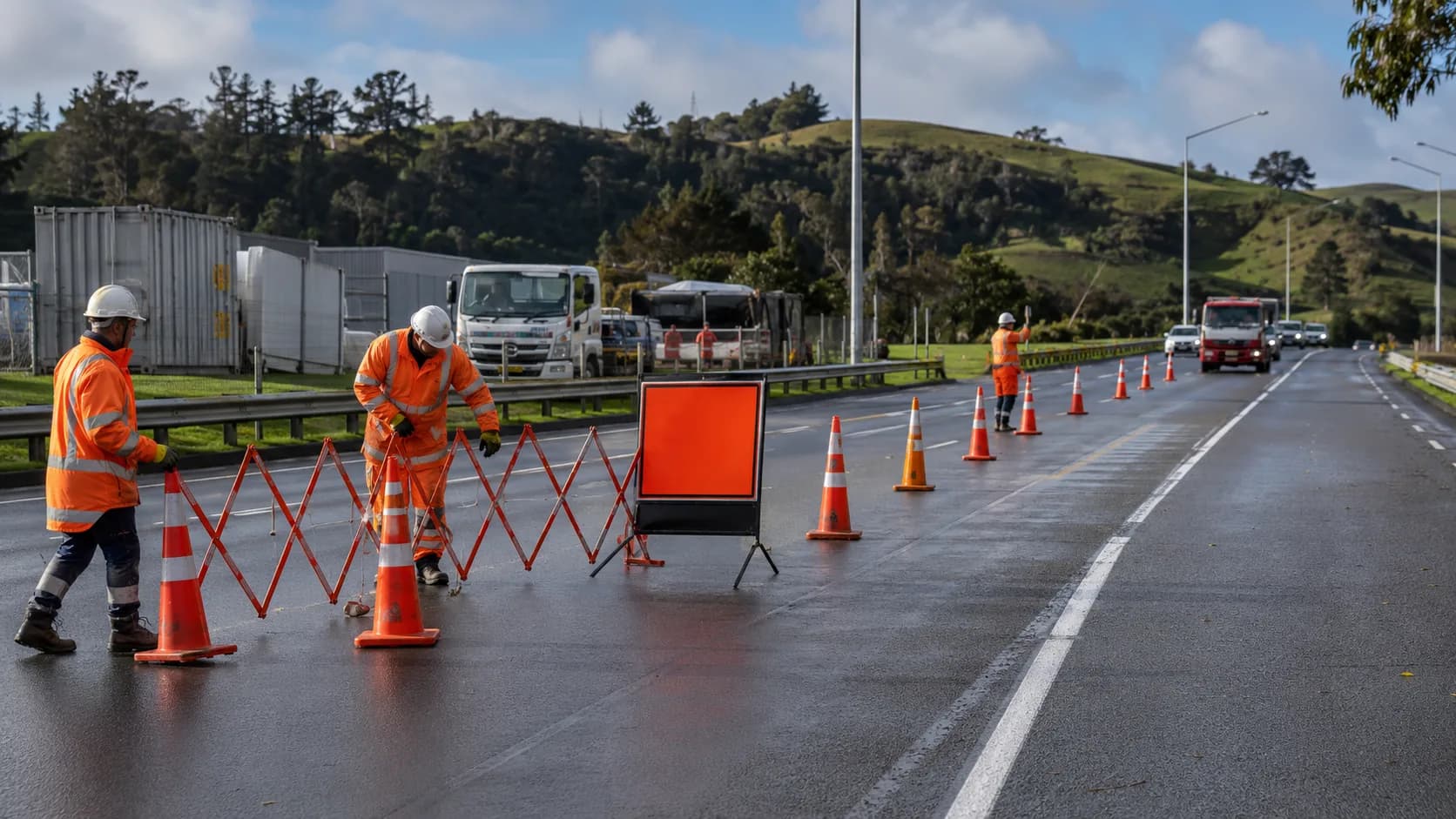
Booking software for traffic management crews in New Zealand.
Shifts with a real minimum, work offered only to the people warranted for it, and a crew moved to a different site the night before.
 Start with Google
- A minimum shift length enforced on the service
- Services attached only to the members who hold the ticket
- A whole crew moved between sites on the team view
- Night, weekend and public holiday work priced apart
Shift booking
They book a shift with the hours on it
Date, start, hours and head count picked on your page, with the minimum charge worked out before anybody has agreed to anything.
Learn moreCrew scheduling
Every closure and every crew on one week
Day shifts, night seal runs and the Sunday callout on one board, so the short site is obvious before the trucks are loaded.
Learn moreA shift with the minimum already in the number.
Hours, head count and start time chosen on your page, with the floor applied before anyone agrees to anything. Nobody buys ninety minutes of a crew and a ute at ninety minutes' money.
- MSMere SolomonMon–Fri · 8–5On
- JFJames FifitaTue–Sat · 9–6On
- ARAna RangiMon–Fri · 9–5Off
Yes on Thursday night is a roster answer.
Attach each service only to the people who hold the ticket for it, and who is on, who is off and who came off a night shift is one screen rather than three phone calls.
One person, a stop/go pair, or the full closure.
The three ways the same stretch of road can be covered, priced side by side so the contractor picks the one the job can carry.
Priced by the hour and the head count
People, hours and gear are separate lines, so when the contractor queries the number you can show him which part it came out of.
A minimum nobody has to argue about
Set the floor on the service and a short job prices at the floor. The call-out fee conversation never has to happen.
Sent before you leave the compound
The quote goes from the phone while you are still parked up, which is usually before anyone else has rung the contractor back.
Extras priced as options · Pro
An arrow board, extra signage, a second ute, another body for the pour. Each one moves the quoted total when the contractor ticks it, so nothing gets re-typed and no number has to be walked back later.
- Night shift · lane closure4 controllers$2,400
- Event road closureCouncil booking$1,050
- Emergency after-hours calloutMinimum applied$380
A whole crew moved in one drag.
The site changes the night before more often than it does not. Drag the shift and every name on it moves too, on any plan.
The assignment travels with the shift
Move the booking and the crew moves with it, so nobody fronts up at last night’s compound at half five in the morning.
The contractor is told, not asked
Switch the reschedule notice on and the change is emailed the moment you make it. It stays off until you do, because not every shuffle is worth a message.
Nights sit on the board properly
A shift that starts at ten and finishes at five is one block, not two halves either side of midnight.
Main let go on the corner in Grey Lynn. Need two on the boards from now until the diggers are out. Anyone left?
Everyone is out and the phone still goes.
This trade runs out of people well before it runs out of hours. With nobody left, the page says so and takes the job as a request anyway.
Requested, confirmed, on site, invoiced.
A shift is not done when the cones come in. Every one of them sits at a stage you can see, so the ones waiting on a purchase order are not the ones you find out about at the end of the month.
Built for your trade
Built for the shifts you actually crew
Shoulder closure for fibre trenching
A contractor has the berm open for three days. Day shift, set hours, and two people on the bats the whole time.
A night chip seal run
Ten at night through to first light under a lane closure. A different rate, a different crew and a different set of people willing to work it.
A town centre closure for the council
A market day or a parade where the closure is the whole job and the client is a council rather than a builder.
A watermain break on a Sunday night
Unplanned and urgent. The minimum charge is the only thing stopping a three-hour callout being sold as three hours.
A crane lift on a state highway shoulder
One lane gone for half a day while the panels go over the fence. Short, tightly timed and always booked late.
Pole replacement with the lines crew
You crew a shift somebody else is running. Their hours, your people, your rate, and their job number on the record.
Footpath control for a concrete pour
Two hours of pedestrian and driveway control for a builder. The minimum applies, and the builder sees it when they book.
A slip clearance on a rural road
Single-lane running with a shuttle each way while the diggers work. Days, not hours, and the same crew each morning.
A week-long plant shutdown
A crew wanted for seven days straight. One booking a day, the same names on each, and one invoice at the end of it.
Paid for the shift, however they pay.
Most of this work is invoiced to a contractor and paid by transfer. Record that by hand for nothing, or take cards on Pro.
Cash and transfer are free
Mark the shift paid when the transfer lands. That costs nothing on any plan and it always will.
Cards come with Pro
A council or an event company wanting to pay on a card gets a link, and the money is yours.
Split a long job in two
Ask for part of a week-long shutdown up front and the rest at the end. Staged requests come with Pro, after the booking exists.
- Hemi WalkerP-1011 · 25 Jun · Bank transfer$380
- Sarah ColemanP-1012 · 25 Jun · Cash$240
- Mere SolomonP-1013 · 28 Jun · Card$380
- James FifitaP-1001 · 27 Jun · Card$190
How far the ute goes for a shift.
Past a certain distance the travel eats the shift. Set what each depot covers and the page stops taking work outside it.
Draw the patch around the depot
Addresses outside it are told straight away, rather than after somebody has already put a crew on the roster for it.
Two depots, two patches
If you crew out of two yards, each keeps its own area and the shift falls to the yard that can actually cover it.
Same rate everywhere inside it
Inside your area the rate is the rate. Bookables never quietly adds anything for a longer run down the highway.
- Grey Lynn8 districts · 2 crew
- Devonport7 districts · 2 crew
- Auckland North7 districts · 2 crew
One contractor, forty shifts a year.
Most of this trade is a handful of civil and utility clients booking again and again. What you crewed, what you charged and what is still unpaid sits on their card instead of in last year's diary.
Their sites and their rates in one place
The agreed hourly rate, the job numbers and the compound they use are on the account, so a new booking starts from what you agreed.
Who you sent, and when
Every shift you have crewed for them, with the names on it, so a query about a Tuesday in March takes a minute rather than an evening.
The callout history beside it
Emergencies, planned works and the shifts they cancelled all sit on the same record, which is the argument at contract renewal.
- 19 AugNight lane closureBooked · $2,400
- 14 AugDay shift, stop/slowPaid · $980
- 9 AugRoad closure quoteAccepted · $1,050
- 3 AugEmergency calloutCompleted · $380
One app for the whole job
Everything you need to run your traffic management business.
Starts free. Grows
only when you do.
Add your whole team and get booking for nothing.
As you grow with us you can go Pro.
Common questions.
Yes. Attach each service only to the team members warranted for it, and neither your booking page nor the assignment list will offer anybody else for that work.
No, and it is worth being straight about it. There is no warrant register and no expiry alerting, whether you work to the older CoPTTM or to the New Zealand guide to temporary traffic management. What you get is control over who can be offered for which service.
You can. Put a minimum charge on the service and short jobs price at that figure, seen by the contractor before they commit rather than argued about on the invoice.
Run them as separate services with their own hours, their own rates and their own crews. Someone booking a night closure sees night availability and a night rate, and your people are only offered the shifts they actually work.
Yes. Drag the shift on the calendar or the team view and every assignment on it moves too. Switch the reschedule notice on and the client is emailed the change, so the site knows before anyone arrives somewhere else. It is off until you turn it on.
The plan reference, the permit number and the access arrangements sit on the booking with the site, so whoever is leading the shift opens the job with the same information you had when you priced it.






Traffic Control & Management guides
All articlesOnline booking vs phone booking: which one actually gets the job booked?
Compare online and phone bookings for service businesses, with a practical way to handle standard jobs, tricky enquiries and customers who prefer a call.
ReadFully booked? How to keep the lead without promising the impossible
Handle enquiries when your diary is full with clear requests, alternative times and a practical manual waiting list that avoids double bookings.
ReadBooking deposits: enough to make it real, not a hostage negotiation
Choose booking deposits that fit your work, explain the balance and cancellation terms, and understand how deposits differ from refundable security bonds.
Read