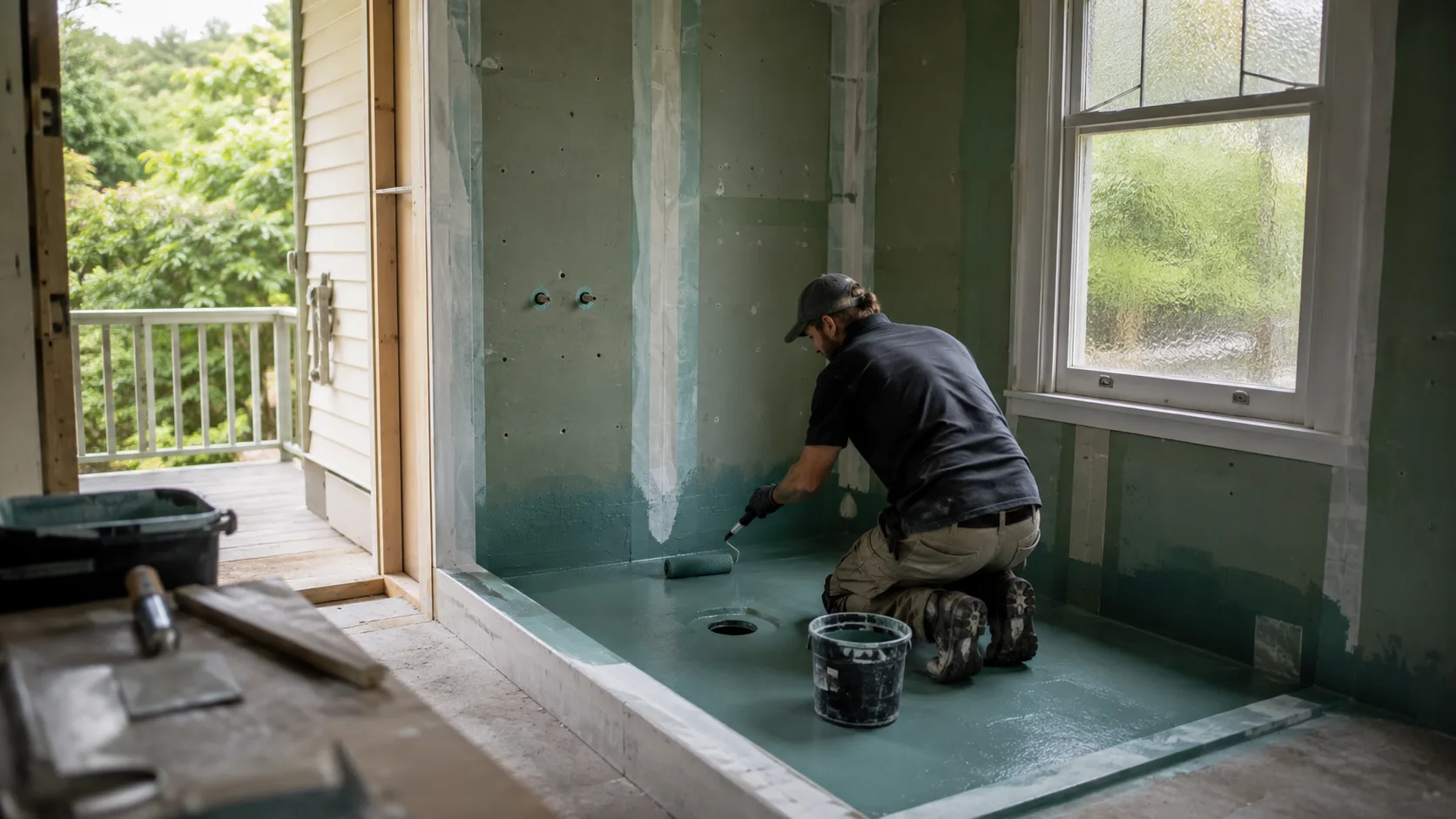
Booking software for waterproofers in New Zealand.
Membrane down, flood test held, tiler in on Friday. Bookables keeps the whole run on one job instead of scattered across a builder group chat.
 Start with Google
- Inspections booked while the ceiling stain is still spreading
- Coats, flood test and handover held together as one job
- Membrane area, upstands and penetrations itemised on the quote
- Cash and transfer recorded free, cards on Pro
- Free, up to 200 bookings a month
Online booking
A shower that leaks books the look at it
The page asks what matters — where the water shows up, tiled or acrylic, single storey or over a garage — and puts it in a slot that exists.
Learn moreSmart scheduling
The cure sits on the calendar as well
Coat one, coat two, the hold and the handover are one job across four days. Move it and the whole run travels, so the tiler is never in early.
Learn moreA membrane is not a visit, it is a sequence.
Prep, primer, bond breaker, coat one, the cure, coat two, the flood test, the handover. Eight things across four days, and the trade behind you only cares about the last one.
The steps live on one job
Not four bookings pretending to be strangers. One job, with its stages, its membrane system and its photos all on the same record.
The cure is booked, not hoped for
A twenty-four hour hold is time on the calendar with your name against it, which is the only version of it a builder cannot talk you out of.
The handover is a step too
The tiler goes in after the flood test, not the afternoon you finished coating. Put that on the calendar and the argument stops happening.
Then the tiler covers it up forever.
Ten minutes after you leave, your work is under a screed and nobody will ever look at it again — until it leaks, and then everybody looks at once.
The address keeps the whole story
The system you used, the coats you put on, the day it was flood tested and what you charged, still there four winters later.
Photos live on the job
The shots you take before the screed goes down sit against the booking they belong to, rather than in a camera roll with your kids in it.
One builder, many addresses
A builder or a building manager is one customer with a file per property, so the block you did last spring is not eleven loose conversations.
- 9 AugBalcony leak, same addressInspection booked
- 2 MarPayment received$2,200
- 26 FebFlood test held 24hPassed · photos on the job
- 11 FebRe-membrane quoteAccepted · $2,200
Every wet area you seal
Built for showers, balconies and everything below ground
Internal wet-area membranes
Bathrooms, ensuites and laundries booked off the builder programme. The job carries the substrate, the upstand height and the coat count.
Leaking shower investigations
Charge for the look, then quote the fix. Re-seal, overlay or strip and re-line go on one estimate as three lines the owner can compare.
Decks and balconies over living space
The ones where a failure ends up in a ceiling. Priced on area, with the flashings, upstands and drainage detailed as their own lines.
Torch-on and liquid membrane roofs
Weather work you will move at least once. Drag it to the next clear day and the homeowner and the roofer both get the new time without a round of texts.
Basement and retaining wall tanking
Excavation access, positive or negative side, drainage coil. Each goes on the estimate as an option with its own price.
Planter boxes and garden edges
Small, awkward and easy to underquote. Book three in a run through the same suburbs instead of losing a day to one on the other side of the harbour.
Remedial work on a leaky building
Long jobs with a body corporate on the other end. One estimate carrying every unit as its own line, then a booking per unit once the scope is signed off.
Flood testing and handover
The hold is a booking, not empty space. It sits between the final coat and the tiler so the sequence survives contact with a builder in a hurry.
Pre-tile inspections for builders
A short paid visit ending in a written scope. Take the money on the day, then send the estimate with the photos and the falls already written down.
Shower tray and tray-to-liner details
The junctions everything fails at. Quote them as named lines so the builder can see the fifteen minutes of detail work they left out of the last price.
One leaking shower, three honest answers.
The homeowner wants one number. There are three: re-seal and monitor, overlay the existing tiles with a new membrane, or strip it out and re-line it.
The extras price themselves, with Pro
Pro adds option groups, so a hob, a niche or a second coat over a green screed each carry their own price and add themselves on when the customer ticks the box.
Quantities, not a lump sum
Square metres of membrane, metres of bond breaker, number of penetrations. Each a line with a quantity and a rate, so the total explains itself.
Exclusions written down
Screed to falls, tile removal, making good. Save them as lines you add or leave off, and the scope argument happens before the job rather than after.
Numbered once and kept
An estimate takes its number when you send it and holds onto it, so no body corporate ends up with two documents wearing the same one.
- Membrane system · bathroomSupply$680
- Strip out old membrane & screedLabour$540
- Two coat application & flood test2 days$980
The forecast turned and the week went with it.
External membrane work is at the mercy of the weather, so half your week is jobs that were supposed to happen two days ago.
Drag it and everyone knows
Push a deck to Thursday and the homeowner, the builder and your applicator all see the new time without three separate texts.
The whole run moves
Coats, hold and handover travel together when you shift the job, so the tiler is never booked in ahead of a membrane that is not down.
Free on any plan
Rearranging the day is not the paid part. It is just the calendar doing the thing a calendar is meant to do.
Paid before the tiler covers it up.
Your work disappears the moment the tiles go down, which is a good reason for the money not to wait until the end of the build.
Cash and transfer, free
Mark it paid on site and the receipt goes out by itself. That costs nothing on any plan and it is not going to change.
Cards are the Pro bit
A tap on the phone before you leave, or a link the builder forwards to whoever actually settles the invoices.
Stages for the long ones
A three-week tanking job can bill a deposit and a completion payment, each raised against the same booking.
- Hemi WalkerP-1011 · 25 Jun · Bank transfer$380
- Sarah ColemanP-1012 · 25 Jun · Cash$240
- Mere SolomonP-1013 · 28 Jun · Card$380
- James FifitaP-1001 · 27 Jun · Card$190
There is a wet patch on the ceiling under the ensuite and it is getting bigger. Can someone look at the shower this week?
Full for three weeks, and the phone still goes.
Good waterproofers are booked out, and that is exactly when someone rings about water coming through a downstairs ceiling.
- Grey Lynn8 districts · 2 crew
- Devonport7 districts · 2 crew
- Auckland North7 districts · 2 crew
Where the drive stops being worth it.
Every waterproofer has a line on the map, and a booking page that does not know about it books work you then have to ring and cancel.
One app for the whole job
Everything you need to run your waterproofing business.
Starts free. Grows
only when you do.
Add your whole team and get booking for nothing.
As you grow with us you can go Pro.
Common questions.
Not as a compliance tool, and be wary of anything that says it does. Acceptable Solution E3/AS2 points at the WMAI Code of Practice for internal wet-area membranes, and working to that is your job. What Bookables does is hold the sequence — prep, primer, bond breaker, coats, flood test — as steps on one booking, with your photos and notes against each, so nothing gets skipped because a builder wanted the tiler in on Monday.
External work prices on area, which is a built-in pricing driver, so your form asks for square metres and does the sums. The details that decide whether the job is any good — falls, upstand heights, flashings, drainage — go on the estimate as separate lines with quantities, so what you allowed for is on paper before anyone lifts a roll.
Not at online checkout, which was removed. Staged payments are real and they come with Pro: once the booking exists you raise a payment for the deposit and another on completion, each with its own card link. Plenty of waterproofers take the lot at sign-off instead, and recording cash or a bank transfer by hand is free on every plan.
It suits it better than one-off homeowners. A builder with six bathrooms in a townhouse block gets one estimate with six lines and six addresses, then six bookings when they sign. Each booking carries the site contact and the access notes, so your applicator turns up knowing whose site it is and who to ring when the screed is still wet.
Everything you touch daily is free: quoting, booking, the calendar, the customer list, coverage areas, your team, and recording cash or bank transfer by hand. Pro is the automation — card payments, staged payments, and slot ranking that scores your open times by the driving they add. The plan cards on this page carry the numbers.




Waterproofing guides
All articlesOnline booking vs phone booking: which one actually gets the job booked?
Compare online and phone bookings for service businesses, with a practical way to handle standard jobs, tricky enquiries and customers who prefer a call.
ReadFully booked? How to keep the lead without promising the impossible
Handle enquiries when your diary is full with clear requests, alternative times and a practical manual waiting list that avoids double bookings.
ReadBooking deposits: enough to make it real, not a hostage negotiation
Choose booking deposits that fit your work, explain the balance and cancellation terms, and understand how deposits differ from refundable security bonds.
Read