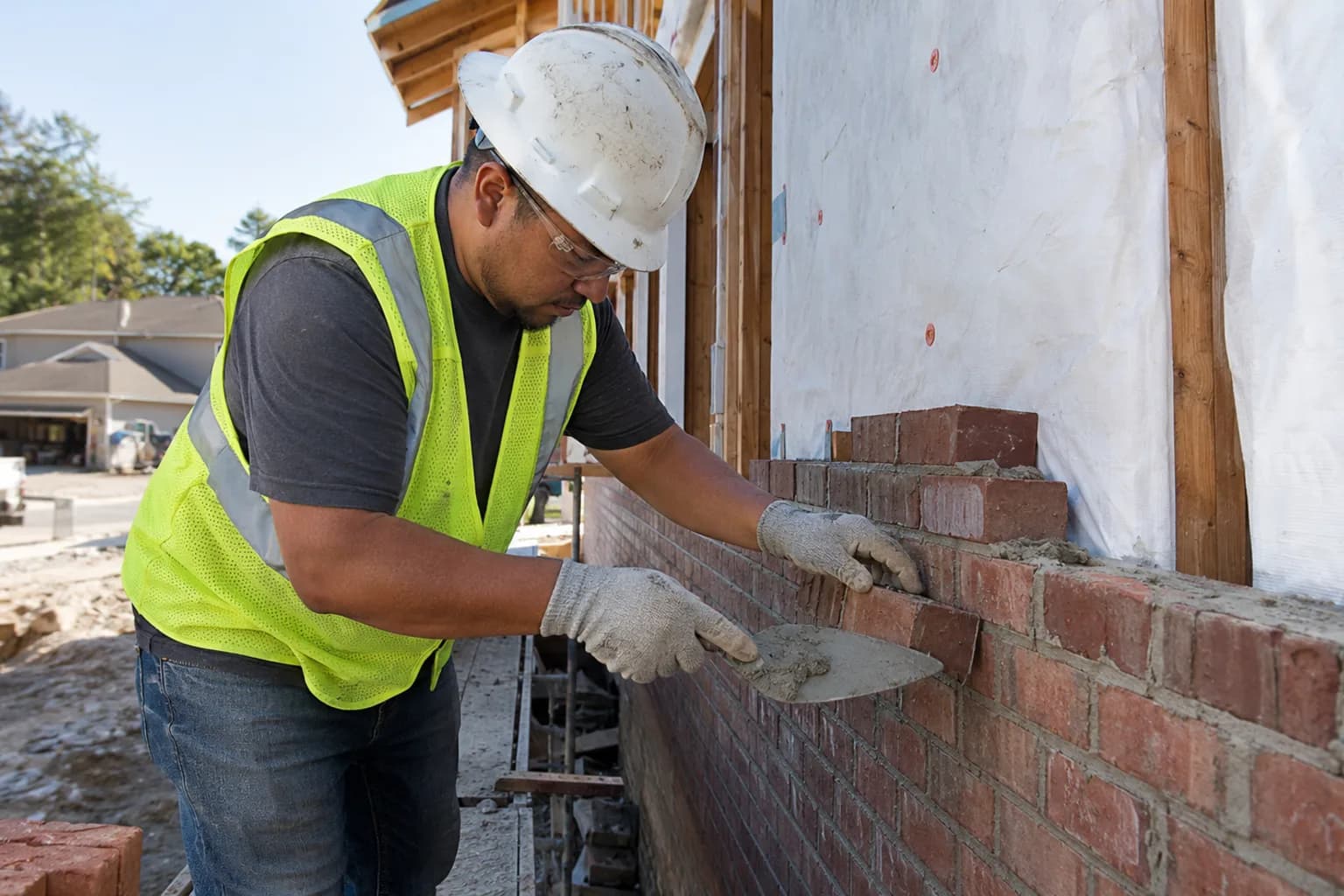
Job software for US masonry and bricklaying contractors.
Take the call about spalling brick, price the chimney rebuild from photos and a site measure, and put both crews on a calendar everyone can actually read.
 Start with Google
- Quotes accepted with an online signature
- Signed quotes convert to booked jobs
- Small jobs bookable from your page
- The whole gang on one timeline
Online booking
An estimate request page that works at 10pm
Homeowners find the cracked chimney on a Sunday. A page that captures the address, the wall height and a photo makes it worth pricing Monday.
Learn moreSmart scheduling
Foundation now, veneer after framing
Block work and brick veneer are weeks apart on the same house. Book them as two dates on one job so the GC can see the gap you left for framing.
Learn moreWhen you are booked out two months.
Masons book further ahead than most trades, and a calendar with nothing open reads like a business that closed. Keep taking the request.
The request still comes in
With no open days, the page asks rather than shutting the door, and it arrives with the photos already attached.
Give them a week, not a date
Most homeowners will wait for a mason they trust. They just want to know how long the wait is.
Boundary wall is bowing at the far end. Can you rebuild it? Photos attached.
One chimney, three ways to fix it.
Tuckpoint what is failing, rebuild the top few courses with a new crown, or take it down to the roofline and rebuild with new flashing. One estimate.
Measured on site, priced on site
Enter the square footage at the wall and the estimate is finished before you get back in the truck.
Three scopes, one estimate
Repair, rebuild the top, or rebuild to the roofline, each with its own price change on the same document.
A number that sticks
The estimate number is set once when you issue it, so the copy they have and the copy you have match exactly.
Staged payments come with Pro
Pro adds staged payments after the job is booked: one payment when the footing is in, the balance at completion. Checks and bank transfers stay free on every plan.
- Face bricks · 1,800 unitsSupply$2,160
- Footings & piersLabour$1,480
- Lay & point 18m fence3 days$3,960
When framing runs late.
The GC slips a week and the days you held for the veneer are suddenly empty. Moving them takes a drag, not a rebuild.
Drag it to the new week
The address, the brick and the notes come along. Only the date changes.
The crew sees it right away
Whoever was scheduled on those days sees the move without a 6am group text.
Free on every plan
Moving work around the calendar is not the part you pay for.
Built for brickwork
Built for every kind of wall
Brick veneer on new construction
Two dates on one job, weeks apart, priced from elevation square footage with the weep and flashing detail noted for the crew.
Chimney rebuilds and crowns
Priced per stack with the roofline photos on the job, and the crown and flashing booked into the same visit, not a return trip.
Tuckpointing and repointing
A half day of its own with a photo of the joint attached, so the color and the mortar type are settled before the truck is loaded.
CMU walls and foundations
Estimated by wall area with core fill and rebar as options, and the block delivery held on the calendar beside the lay days.
Retaining walls in block or stone
Wall area drives the price, drainage and cap ride as options, so a taller wall shows the homeowner what it actually costs.
Spalling and freeze-thaw repairs
Books as an inspection first, then the replacement units, with the brick match photographed so the second visit brings the right ones.
Lintel replacement and crack stitching
Priced per opening rather than pretending it is a square foot job, and scheduled as the short visit it usually is.
Stone veneer and fireplace surrounds
Quoted as a job with the stone choice as an option, so the version they actually want has a number attached to it.
Outdoor kitchens and fire pits
Sold as one job with the counter and the cap as separate lines, and booked for a week you genuinely have open.
Brick mailboxes, steps and stoops
Small work that pays when it sits near a bigger job, priced per unit and slotted into the day you are already in the neighborhood.
- Hyde Park8 counties · 2 crew
- Zilker7 counties · 2 crew
- Austin North7 counties · 2 crew
How far you will haul a pallet.
Brick is heavy and the margin drops with every mile. Draw the area you cover once and the page holds that line for you.
- 12 AugRepoint · south elevationBooked · $640
- 4 AugBrick match photographedReclaimed stock · lime mix
- 22 JulGarden wall quoteAccepted · $7,600
- 9 MayPayment received$1,240
The house remembers its own brick.
What you matched, what the mortar was and when it was last pointed stay on the property, so the call about the second crack starts from something written down.
Fill the day with work that is on your way.
Tuckpointing pays when it sits near the wall you are already building. Pro scores your open slots by how much driving each one adds.
Slots ranked for you
You still pick the day. The ranking just puts the slots near the site you are on tomorrow at the top of the list.
Half days that earn
A repoint, a lintel and a stoop are what turn a half-empty week into a full one.
Pro
Slot ranking is the Pro piece. The calendar and the bookings themselves are not.
- TBTyler BrooksToday · 15:45Best+8 min
- JCJasmine CarterToday · 14:30+22 min
- DADerek AlvarezTomorrow · 09:15+35 min
Get paid before you load up.
Checks and transfers are how most masonry gets settled, and recording them is free. Cards are the part that comes with Pro.
Checks and transfers are free
Mark it paid and the receipt goes out automatically. No plan required for any of it.
Cards come with Pro
For the homeowner who would rather tap a card than write anything out.
We never hold your money
Card payments land in your own account. Staged payments split a job after it is booked, not at checkout.
- Marcus BellP-1011 · 25 Jun · Bank transfer$380
- Ashley NguyenP-1012 · 25 Jun · Cash$240
- Tyler BrooksP-1013 · 28 Jun · Card$380
- Jasmine CarterP-1001 · 27 Jun · Card$190
One app for the whole job
Everything you need to run your bricklaying business.
Starts free. Grows
only when you do.
Add your whole team and get booking for nothing.
As you grow with us you can go Pro.
Common questions.
Yes. Set wall area as the pricing driver and the estimate builds from the measurements you take on site. A garage elevation and a full two-story wall come off the same rate, so you can price it in the driveway.
Book the inspection, then the repair, both on the same job. The photos and notes from the first visit are already there for the second, which matters when the crew showing up is not the person who looked.
Yes. Tuckpoint the worst elevation, tuckpoint the whole chimney, or rebuild above the roofline can sit on one estimate as options with their own price change. Most people pick the middle one when they can see all three.
Yes. Notes and photos live on the customer record, so the type S you used on the retaining wall and the type N on the historic repoint are written down, not remembered. ASTM C270 is the spec; this just keeps your note of it.
Recording a check or a bank transfer by hand is free, and that covers most masonry work. Card payments come with Pro, and so does splitting a big job into a payment at the footing and the balance at completion.
Yes. Add them to the team and they get the addresses and start times for the days they are working. Job values stay off their screen, which keeps the conversation on the wall instead of the invoice.





Bricklaying guides
All articlesOnline booking vs phone booking: which one actually gets the job booked?
Compare online and phone bookings for service businesses, with a practical way to handle standard jobs, tricky enquiries and customers who prefer a call.
ReadFully booked? How to keep the lead without promising the impossible
Handle enquiries when your diary is full with clear requests, alternative times and a practical manual waiting list that avoids double bookings.
ReadBooking deposits: enough to make it real, not a hostage negotiation
Choose booking deposits that fit your work, explain the balance and cancellation terms, and understand how deposits differ from refundable security bonds.
Read