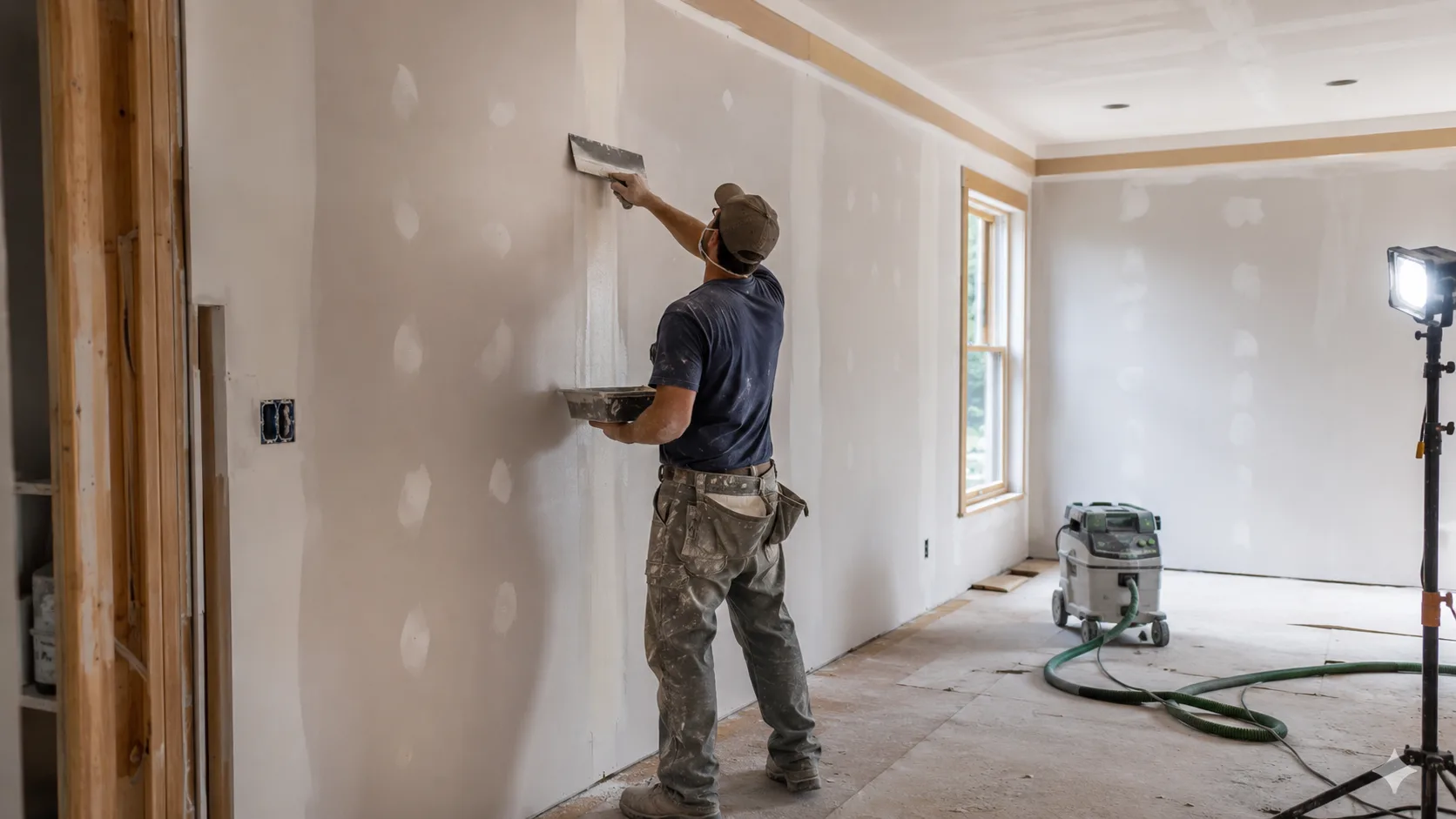
Booking and estimating software for plastering contractors in the US.
From the first photo of a stained ceiling to the final coat and the paid invoice, one job record holds all of it.
 Start with Google
- Patch and repair jobs booked online
- Rooms quoted with online acceptance
- Return coats planned by drag
- Confirmations and reminders on autopilot
Online booking
Estimate visits people can book themselves
Little gets priced without eyes on it. Put the estimate visit on your page with a real duration and let homeowners grab a time while you are on stilts.
Learn moreSmart scheduling
Hang, tape, sand and texture, in order
Three coats of mud each need to dry, and skipping ahead shows up in the paint. Give every stage its own slot and duration on one calendar.
Learn moreBuilt for your trade
From a patch round a light switch to a whole house of walls and ceilings
Water-damaged ceiling repair
Your steadiest call. Books short, priced by room, photos already in the thread, and the adjuster gets a real estimate instead of a text.
Popcorn ceiling removal
Priced by room with the skim coat and the texture match as their own lines, so the customer sees why it is not a morning.
Hang and finish a new addition
A run of days, not a booking. Hang, tape, sand and texture each carry their own duration and their own crew on the calendar.
Level 5 skim coat before dark paint
Sold as an option with a price difference on the service, so the upgrade is agreed in writing before the first coat of mud.
Texture matching a patch
Orange peel, knockdown or hand trowel. Each is a choice on the repair service, because matching the wrong one is a callback.
Stucco repair and re-coat
Weather dependent and priced by area. Takes a real block on the calendar with cure time and moves as a block when rain shows up.
Veneer plaster over blueboard
A different rate and a different skill from tape and mud, so it gets its own service rather than a line buried in a quote.
Patch after the electrician
Small, fast, and a schedule wrecker when the calendar lies about it. Give it a true duration and let it book itself in.
Garage and basement finishing
Priced by square feet, with fire-rated board where the code calls for it quoted as its own line rather than assumed.
Crown molding and trim plaster
The profile is the whole conversation, so it is an option group with prices attached rather than a number pulled out of the air.
What the job carries before anyone loads up.
Room count, finish level, the profile to match, where the water is and how to get in. On the job when you take it, not remembered on the drive over.
- Ashley Nguyen2mCan you come Thursday instead?
- Bookables1hA booking request needs your answer
- Tyler Brooks3hRunning 10 late on the Mueller job
The photos, the dust question and the yes, all one thread.
Half of plastering is quoted off pictures of a stain on a ceiling. Those pictures belong on the job, not three screens deep in a phone.
- 21 AugUnit 6, walls and ceilingsBooked · $2,150
- 9 AugUnit 5, ceilingsPaid · $1,340
- 1 AugTrim profile, units 5-8Accepted · $980
- 18 JulUnit 4, make goodCompleted · $420
The builder who is eleven rooms deep.
One customer, a long run of jobs and a payment history worth keeping, instead of eleven separate searches through last year's messages.
Refinishing a room, quoted three ways.
When someone asks what drywall work costs, they want three numbers: patch and paint-ready, a skim coat over what is there, or tear out and re-hang.
Square feet, rooms or hours
Price the way you already price. Square feet for walls and ceilings, rooms for a refinish, hours for patch and repair work.
Finish level is a choice, not a fight
Level 4 and Level 5 sit side by side with a price difference, so the standard is agreed before anyone opens a bucket of mud.
Accepted online and recorded
They accept from the link and the job carries exactly what they agreed to, which is what settles it when the painter objects.
Extras priced as options · Pro
Pro adds the choices that ride on top: Level 5 finish, knockdown or orange peel texture, moisture-resistant board in the bath, haul-away. Each carries its own price difference, so the total updates.
- Plaster & materialsSupply$260
- Prep & set-outLabour$340
- Skim & two coats6 hrs$680
When the schedule moves, and it will.
Mud dries slower in a cold house, stucco will not go on in the rain, and the framer ran late. Losing the day is fine. The ten phone calls are not.
Drag it and you are done
Move the job on the calendar and your customer and your crew both find out. Free, on any plan.
The whole run moves with it
Push the hang and the tape behind it follows, instead of leaving a hole you discover Thursday morning.
You never make the awkward call
The notification handles it, and you get on with the next room.
Booked out three weeks, and that is a good sign.
The best finishers always are. Your page should say so honestly and still capture the homeowner who is willing to wait for you.
Slots come from your real calendar
The page can only offer what is genuinely open, so nothing lands in a week you already promised to a builder.
Booked out still wins the lead
With no times left they send photos and an address instead, and it arrives in your inbox rather than as a missed call.
Quote now, schedule later
An estimate can go out and get accepted with no date on it yet. The date follows as soon as the run ahead clears.
Ceiling in the back bedroom has come down after a leak. Photos attached, is there anything before the end of the month?
Get paid before you load up.
Your money is a progress draw from a GC or a balance on completion. Both land faster when the invoice is already attached to the job.
Cash and checks are free
Record what came in by hand and the job closes. No plan needed, and we never hold your money.
Cards come with Pro
A payment link on the invoice instead of a collection call two weeks out. That is what the paid plan buys you.
Staged when the job is staged
A big hang-and-finish job can bill in stages once the booking exists. Nothing is charged at the moment of booking.
- Marcus BellP-1011 · 25 Jun · Bank transfer$380
- Ashley NguyenP-1012 · 25 Jun · Cash$240
- Tyler BrooksP-1013 · 28 Jun · Card$380
- Jasmine CarterP-1001 · 27 Jun · Card$190
The ZIP codes worth the drive.
A truck full of board and fifty minutes of interstate is a different job from one across town, no matter what the estimate says.
Draw it instead of describing it
Mark the areas you cover. Outside them people get a clear answer instead of a booking you have to cancel later.
Crews can hold different ground
Your stucco crew and your interior finishers rarely work the same side of the metro. Each can carry its own area.
And the work you pass on
Historic lath and plaster, three-story stucco without a lift, whatever it is. Say it on the page, not on site.
- Hyde Park8 counties · 2 crew
- Zilker7 counties · 2 crew
- Austin North7 counties · 2 crew
Starts free. Grows
only when you do.
Add your whole team and get booking for nothing.
As you grow with us you can go Pro.
One app for the whole job
Everything you need to run your plastering business.
Common questions.
That is a state question, and sometimes a city one. California is the clearest example: the Contractors State License Board issues a C-35 Lathing and Plastering classification for anyone contracting that work above the state threshold, on top of the journeyman-level experience and the contractor bond every CSLB licensee carries. Other states run their own systems and a few leave it to the county. Check your own board, then put your license number on the estimate template so it goes out on every quote.
Set the finish level as an option on the service with its own price difference. Level 4 and Level 5 in the Gypsum Association GA-214 levels of finish are genuinely different amounts of labor, and having the customer choose the higher one in writing is far easier than explaining it after the painter rolls out a sheen.
For a patch or a small skim coat, usually yes. Ask for pictures in the thread, price the estimate by square feet or by room, and send it. Anything with a water stain or unknown lath behind it deserves a real look, and that estimate visit books from the same page.
Drag it on the calendar and everyone attached gets told automatically. That works on every plan, including the free one. Plastering weeks slip constantly, and the real cost was never the lost day, it was the ten phone calls after it.
Cash and check recorded by hand are free and stay free. Card payments come with Pro, which is what most contractors want, because it turns a collection call into a link on the invoice. The plan cards on this page carry the numbers.
Yes, and they behave very differently. A general contractor is one customer with a long run of jobs and a payment history worth keeping. A homeowner is one address and a lot of questions. Both sit on the same records, so nothing is looked up twice.


Plastering guides
All articlesOnline booking vs phone booking: which one actually gets the job booked?
Compare online and phone bookings for service businesses, with a practical way to handle standard jobs, tricky enquiries and customers who prefer a call.
ReadFully booked? How to keep the lead without promising the impossible
Handle enquiries when your diary is full with clear requests, alternative times and a practical manual waiting list that avoids double bookings.
ReadBooking deposits: enough to make it real, not a hostage negotiation
Choose booking deposits that fit your work, explain the balance and cancellation terms, and understand how deposits differ from refundable security bonds.
Read