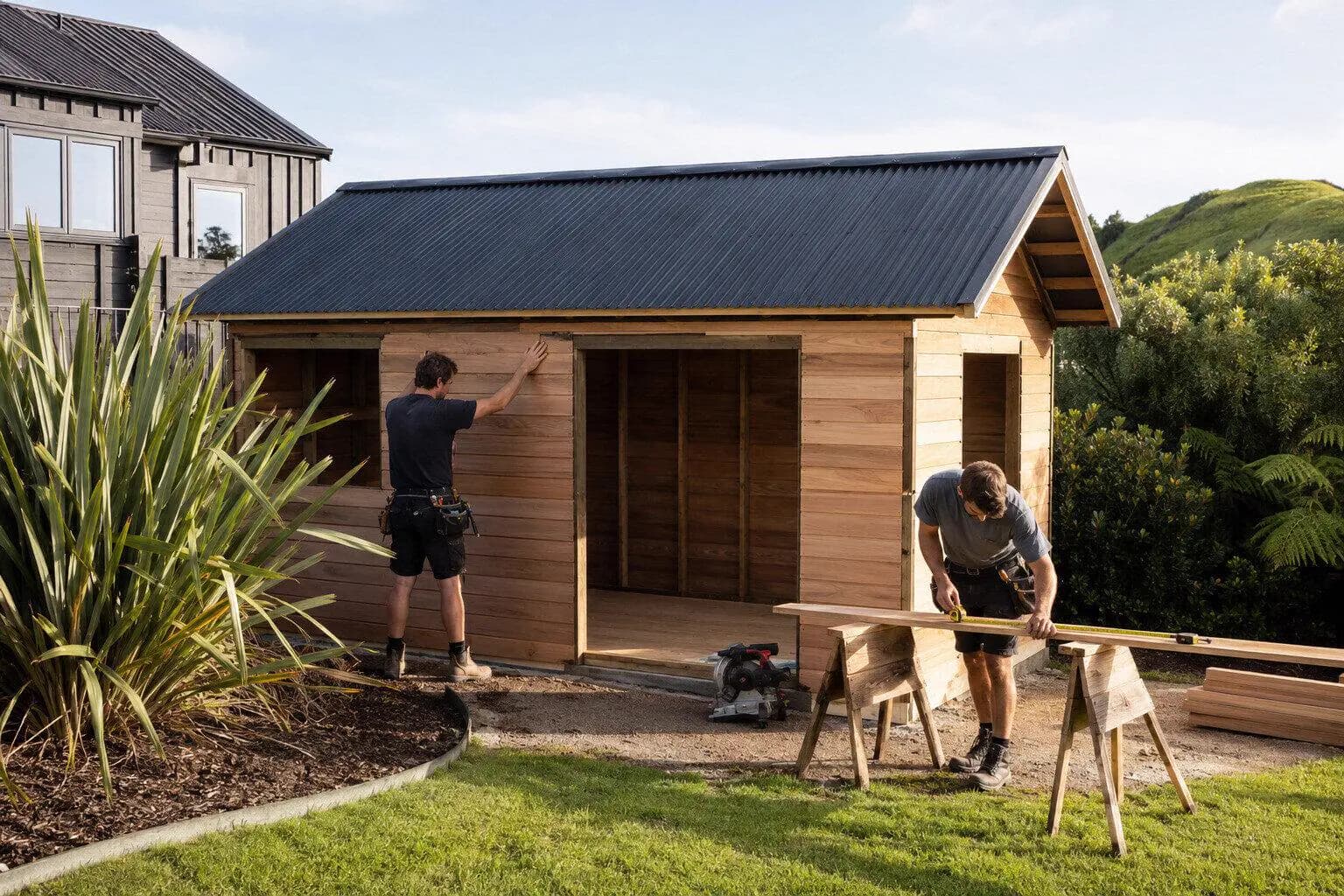
Booking software for shed and carport builders in New Zealand.
A kit has a lead time, so the job has two dates. Price the spec, book the measure, and keep the pad and the build in step.
 Start with Google
- Site visits booked online, address inside your run
- Kit and slab options priced as quote tiers
- Signed quotes turn into scheduled jobs on their own
- Pour day and build day both visible on one timeline
- Statuses from en route to completed as the job moves
Online booking
The site measure books itself overnight
Someone pricing an implement shed after tea picks a measure-up slot you are actually free for, and the section is checked against your patch first.
Learn moreSmart scheduling
Pad day and build day on one board
Both dates hang off the one job. When the kit turns up a fortnight late, drag the build week across and the crew see it for themselves.
Learn moreOne shed, three sizes, one document.
A two-bay garage, the same shed with a lean-to, or the wider span with a mezzanine. Priced options the customer picks between.
Size is the price
Floor area is a real pricing driver, so the span and the bay count you enter on site build the estimate before you are back in the ute.
Doors and colour are options
A second roller door, a personal access door or a colour off the range each carry their own price change on the same document.
A number set once
The quote number is fixed the moment it goes out, so your copy and their copy are unmistakably the same document.
Several named options come with Pro
Several named options on one estimate is the Pro part. On any plan the second roller door, the PA door and the colour off the range sit as priced extras on the line, and the accepted document becomes the job.
- Building kit · two doors, chosen finishSupply$8,400
- Concrete and footingsBefore delivery$4,200
- Install crew, two daysAfter delivery$3,600
When the kit turns up late.
The delivery moves and the week you held for the build is worth nothing where it is. Moving it is a drag, not a rewrite.
Drag it, do not rewrite it
The address, the spec and the site photos stay attached to the job. Only the dates move.
The pour keeps its own date
Pad and build are separate bookings on one customer, so the cure time stays on the calendar instead of living in your head.
Free on any plan
Moving work around the calendar was never the part you pay for.
Looking at a double garage beside the house. Photos of the access attached — what lead time are you on?
When you are quoting into next summer.
Shed builders sell months ahead, and a page with nothing free on it reads as a business that has shut. The enquiry should still arrive.
The measure is paid for, then paid back.
Charge for the visit if you charge for it. When the estimate is accepted the fee comes off it as a credit line, so a paid look never has to be argued about twice.
- Grey Lynn8 districts · 2 crew
- Devonport7 districts · 2 crew
- Auckland North7 districts · 2 crew
How far you will cart a kit.
Steel is heavy and a crew is a day. Claim the districts you genuinely cover and work past the line asks first instead of booking itself in.
- 4 MarEstimate acceptedWider span · $18,400
- 19 MarFootings and pad pouredCompleted · crew of two
- 11 AprFrame up, doors hungCompleted · handover photos
- 11 AprBalance received$9,200
The address remembers what went up.
The size, the finish and what the engineer signed off stay on the record, so the lean-to call four years later starts from something written down.
Built for kit buildings
Built for every size on the chart
Single garage on a suburban section
Span, door and pad go on one estimate, and the accepted version turns into the pour booking and the build booking without retyping it.
Carport off the side of the house
Posts into footings rather than a full pad. A half-day job that only pays properly when it sits near something else you are already on.
Implement shed on a lifestyle block
Open bays, a wind zone to design for and a truck to get up the drive. Floor area drives the price and the access notes ride on the booking.
Farm shed with a mezzanine
The mezzanine, the extra stud height and the second personal door are priced options on one document rather than three separate quotes.
Lean-to onto an existing shed
Measured against what is already standing, so the photos from the site visit are still on the record the day the crew arrives to build it.
Hay shed well out of town
Past the districts you cover, so it lands as a request you price with the cartage in it rather than booking itself into a free Tuesday.
Workshop with power and a concrete floor
Your concrete crew and the electrician each hold their own day on the one job, and the customer sees one set of dates rather than three trades.
Pad and footings only
Plenty of kits go up by someone else. Price the pad on its own, book the pour, and close the job once the concrete has been signed off.
Re-roofing an old woolshed
Roof area prices it, the site photos sit on the customer record, and the next call about the same shed starts from what you wrote down.
- Hemi WalkerBooked just now$215Accepted
- Sarah ColemanOpened 2h ago$480Viewed
- The Oak CaféSent yesterday$120Sent
You can see they opened it.
A document this size gets sat on for a fortnight. You can see when it was opened and, when they are ready, which option they typed their name against.
- MSMere SolomonMon–Fri · 8–5On
- JFJames FifitaTue–Sat · 9–6On
- ARAna RangiMon–Fri · 9–5Off
Who is free the day it arrives.
Delivery day needs bodies and usually a machine. Hours are set per person, and nothing can be booked onto somebody who is not working that day.
- Sarah Coleman2mCan you come Thursday instead?
- Bookables1hA booking request needs your answer
- Mere Solomon3hRunning 10 late on the Newmarket job
Six weeks of small questions.
Between accepting and standing it up there is a run of them. They stay in one thread against the job instead of scattered over three phones.
The money before the kit is ordered.
Most of this trade still settles by bank transfer, and recording one costs nothing at all. Cards are the part that sits on Pro.
Cash and transfer are free
Mark it paid and the receipt goes out by itself, with no plan involved in any part of it.
Cards come with Pro
For the customer who would rather tap than go looking for your account number on a Saturday.
Staged, after the booking
Pro splits a shed into a leg before the kit is ordered and the balance at handover. It happens on the job, never at a checkout.
- Hemi WalkerP-1011 · 25 Jun · Bank transfer$380
- Sarah ColemanP-1012 · 25 Jun · Cash$240
- Mere SolomonP-1013 · 28 Jun · Card$380
- James FifitaP-1001 · 27 Jun · Card$190
The measure-up that fits tomorrow.
A site measure is an hour of work and a long drive. It only pays when it sits near the shed you are already standing on.
Ranked, not rearranged
You still pick the day. The ranking lifts the slots that add the least driving to what you already have booked.
Two measures, one run
Pricing two sites in the same district on one trip is the difference between a paid day and a wasted tank of fuel.
Pro
The ranking is the Pro part. The calendar, the bookings and dragging them about are not.
- MSMere SolomonToday · 15:45Best+8 min
- JFJames FifitaToday · 14:30+22 min
- ARAna RangiTomorrow · 09:15+35 min
One app for the whole job
Everything you need to run your shed and carport builders business.
Starts free. Grows
only when you do.
Add your whole team and get booking for nothing.
As you grow with us you can go Pro.
Common questions.
Yes. Your page offers measure-up slots from your real working hours, and the address is matched against the districts you cover before anything lands in the diary. Anywhere else arrives as a request instead.
Put the sizes on one document. Each option carries its own lines, so a two-bay garage, the same shed with a lean-to and the wider span sit side by side and can be accepted online by typed name. Several named options on one estimate is the Pro part.
Yes. They are two bookings against the one customer, so the cure time is on the calendar rather than in your head, and either can be dragged to a new day when the weather or the delivery moves.
No. Bookables does not place the manufacturer order and has no idea where your kit is. It holds the accepted specification, the two dates and the money, so when a delivery date shifts you can see everything that has to move with it.
No. Whether a shed needs building consent, or falls under a Schedule 1 exemption, and whether the wind zone under NZS 3604 puts you into specific engineering design, is between you, your Licensed Building Practitioner and the council. Bookables keeps the drawings on the job record.
The Free plan covers a real month of work with no card required, and recording cash or a bank transfer costs nothing on any plan. Pro adds card payments, several priced options on one estimate, and payment stages. The plan cards carry the numbers.