Booking software for arborists in New Zealand.
The visit books online, the removal gets priced under the tree, and the week after a blow gets rebuilt on one board.
 Start with Google
- Assessment visits booked online
- Removal quotes signed with tiers
- Storm surges captured as requests
- Crew days planned on one timeline
Online booking
Sell the visit, not the tree
No arborist prices a macrocarpa off a photo. Your page books the assessment against real slots, and the removal gets quoted once you have seen it.
Learn moreSmart scheduling
The week after a blow, rebuilt
When a southerly drops half a shelterbelt, the diary is a board. Move the crew day and the climber, the groundie and the chipper move with it.
Learn moreThe morning after the southerly.
You cannot clear a driveway and answer the phone at once. The page carries on taking the work while you are up a tree.
No slots left, still asks
The request comes in with photos and the days that suit, so the caller you missed is still a job on Thursday.
One list, not a notepad
Every storm job sits together with what it is and where, so the limb on the roof gets picked before the hedge.
Big limb came down across the drive overnight and there is more of it hanging. Photos attached.
One pohutukawa, three answers.
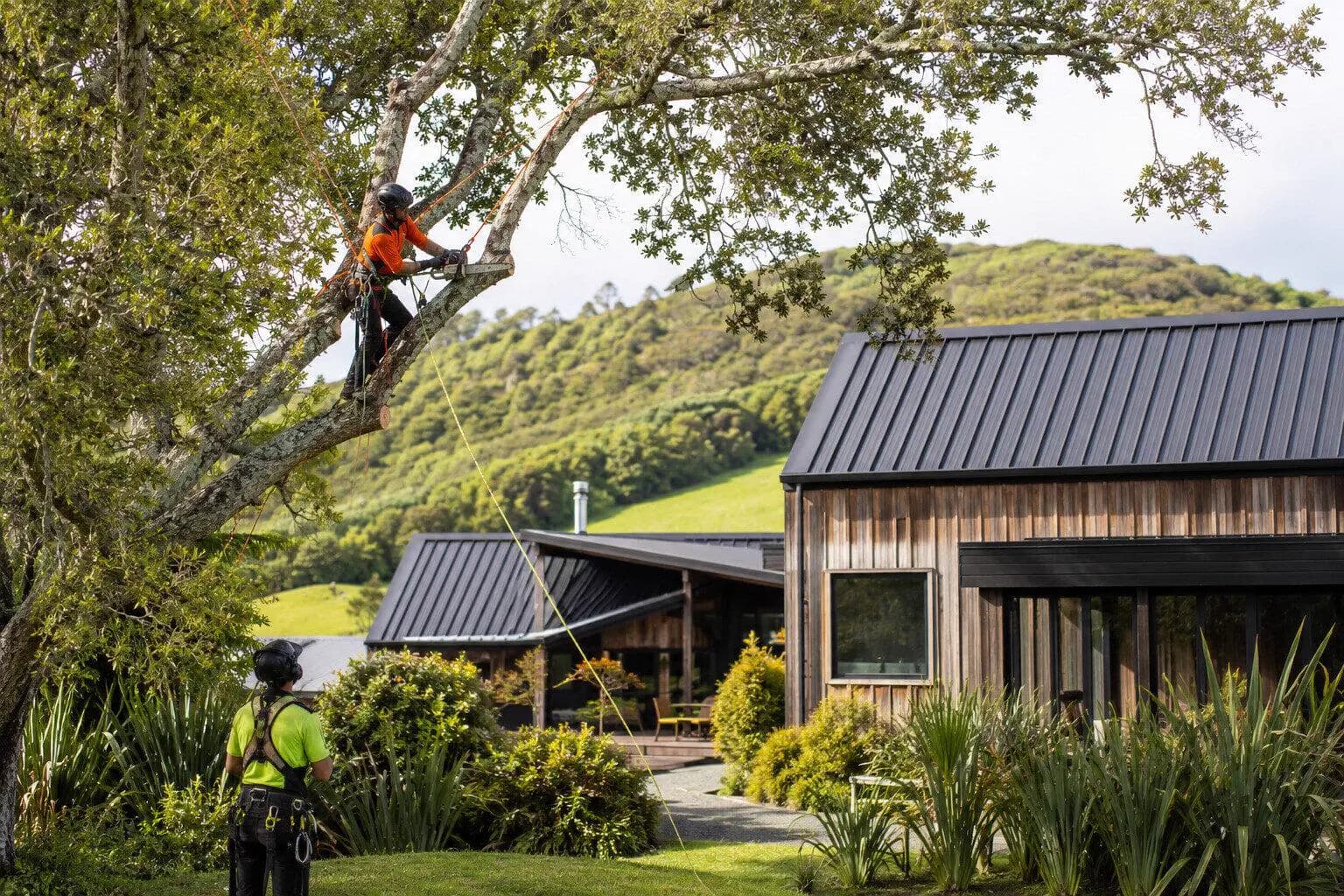
Reduce it back off the roof, take out the dead and the rubbing limbs, or remove it and grind the stump. Three options, one document.
Access sets the price
A tree behind the house is a different job to one on the berm. The option you send makes plain which one you priced.
Where the chip goes is a line
Leave the mulch on site or cart the lot away. Each answer carries its own price change on the same estimate.
A number set once
The quote number is fixed when it is issued, so your copy and the copy on their phone cannot drift apart.
Options and stages come with Pro
Estimate options are the Pro part, along with splitting a booked removal into a leg up front and the balance at the end. Recording cash and bank transfer by hand is free on any plan.
- Fell & dismantle · large gumRemoval$2,400
- Chip & haul the branchesGreen waste$480
- Stump grind · 1 stumpFollow-on$320
Built for tree work
Built for everything that comes off a tree
Tree removals
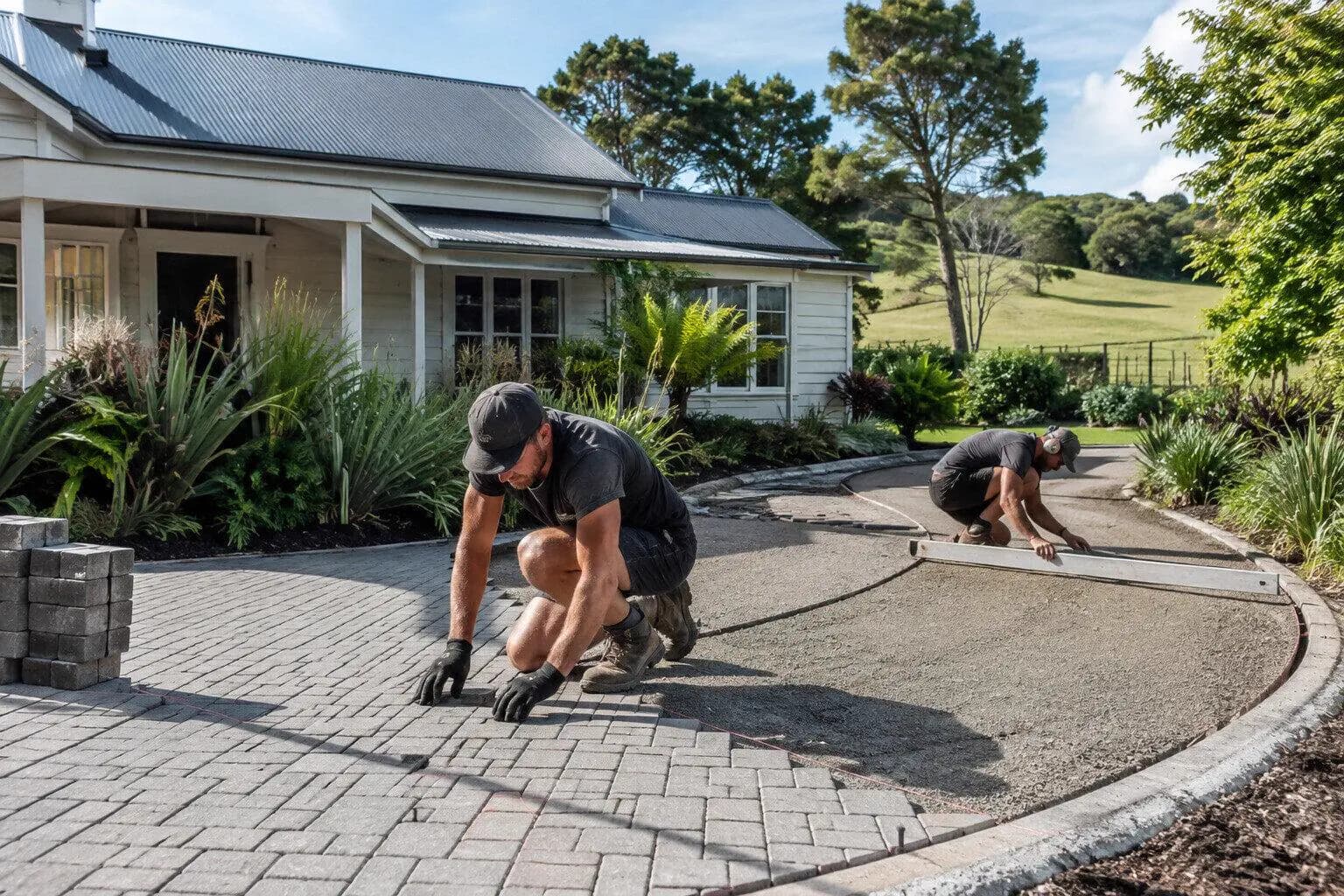
Fell, chip and grind priced as separate options, and the one the owner accepts turns into a booked crew day with the scope carried across.
Crown reductions
Reduction and thinning priced from the canopy you climbed, with an expiry on the quote so it gets answered while the price still holds.
Shelterbelt trimming
A run of pines trimmed to height, quoted by the metre of belt as lines on one estimate rather than as a quote per tree.
Storm damage callouts
A limb down across the drive lands as a request with photos, and the crew day it becomes keeps the access note and the gate code.
Stump grinding
A follow-on grind books as its own visit against the same property, with the payment request going out once the hole is filled.
Resource consent jobs
The consent, the assessment and the quote all sit on the one address, so the crew day is booked the week the council says yes.
Powerline clearance
Clearance work held to the shutdown window, with the crew and the platform locked to the booking so nothing else takes them.
Hazard tree assessments
A visit that produces a report and no chainsaw work still books, gets priced as a job and gets invoiced like any other.
Section clearing
Clearing a site before the builders start, quoted as one job with the haulage as its own line and a date the builder can plan around.
Annual orchard and hedge work
The same trim every winter set up as a standing arrangement, so next year is already in the diary instead of chased in June.
The crew day is the unit, not the hour.
A climber, two on the ground and a chipper are one object in the diary rather than three people to line up. The timeline lays every lane across the day, and a job that needs the platform holds it for the whole span instead of hoping.
- Hemi WalkerBooked just now$215Accepted
- Sarah ColemanOpened 2h ago$480Viewed
- The Oak CaféSent yesterday$120Sent
The quote that waits on somebody else.
A protected tree means a decision you do not control, and weeks of it. Give the quote an expiry, then watch which ones were opened and which went quiet.
- 14 AugStump grind · rear boundaryBooked · $380
- 2 AugRemoval · leaning limb over shedAccess: side gate 900mm
- 21 JulAssessment visitQuote accepted · $2,450
- 6 JunPayment received$640
The property remembers its own trees.
What came off last time, how the chipper got in and what you said about the lean stay on the address, so the call two winters later starts informed.
- Sarah Coleman2mCan you come Thursday instead?
- Bookables1hA booking request needs your answer
- Mere Solomon3hRunning 10 late on the Newmarket job
Three people, one limb.
The owner, the person next door whose fence it hangs over and the property manager all want an answer. Each keeps a thread, and every thread sits on the job.
When it is too windy to climb.
Nobody goes up in that, so the day moves. One drag takes the whole crew day and everything filed on it.
Drag it to the calm day
Access notes, consent and photos stay on the job. The date is the only thing that changes.
The crew sees it
Everyone rostered on those days sees the new plan without a round of calls before six.
Free on any plan
Moving work around the calendar was never the part you pay for.
Paid before you pack the chipper.
Most of this is still settled by transfer on the day, and recording one is free. Cards are the piece that sits on Pro.
Cash and transfer are free
Mark it paid and the receipt sends itself, with no plan involved in money you took at the gate.
Cards come with Pro
For the owner who would rather tap than go and find their account details while you coil the ropes.
Staged, after the booking
Pro can split a removal into a leg up front and a balance at the grind. It sits on the job, not on a checkout.
- Hemi WalkerP-1011 · 25 Jun · Bank transfer$380
- Sarah ColemanP-1012 · 25 Jun · Cash$240
- Mere SolomonP-1013 · 28 Jun · Card$380
- James FifitaP-1001 · 27 Jun · Card$190
How far the chipper is worth towing.
A tipper with a chipper behind it eats an hour before you start. Draw the ground you cover once and let the line do the arguing.
Picked off the map
Claim real districts rather than a circle, so the edge of your patch follows the roads you would take.
Past it, they ask
Work outside your ground turns up as an enquiry to price or refuse, not as a booking already in Tuesday.
Crew by ground
Say which crew covers which patch and the far side stops being offered to the wrong team.
- Grey Lynn8 districts · 2 crew
- Devonport7 districts · 2 crew
- Auckland North7 districts · 2 crew
One app for the whole job
Everything you need to run your tree surgery business.
Starts free. Grows
only when you do.
Add your whole team and get booking for nothing.
As you grow with us you can go Pro.
Common questions.
No. The assessment visit books online; the removal is quoted after it. Access, the drop zone and where the chip ends up set the price, and a form cannot see any of them.
Yes. One estimate can hold a crown reduce, a full removal and a removal with the stump ground out, with the one you recommend marked. Options are a Pro feature.
Scheduled and notable trees need resource consent before work, and that is a wait. Put an expiry on the quote, keep the consent correspondence on the job, and book the crew once it is granted.
Genuine slots book straight away and the rest land as requests carrying preferred days, so the calls you never picked up are still a list on Friday rather than gone.
Yes. Put the climber, the groundies and the operator on the one booking with their roles, and each is checked free for the whole span before it commits.
Yes. There is a monthly booking allowance on the free plan, no card needed and no charge per person on the team. The plan cards carry the numbers.