Booking software for New Zealand stump grinders.
Ask the gate width before you hitch the trailer, price the single stumps off the page, and quote the shelterbelt jobs properly.
 Start with Google
- Gate width and diameter asked at booking
- Single stumps priced and booked without a call
- Bigger clearances routed to a written quote
- Small jobs pulled towards a day you already work nearby
Online booking
The gate width arrives with the job
Access, stump diameter and where the chip ends up are picked while they book, so the machine on the trailer is the right one before you leave.
Learn moreSmart scheduling
A one-stump job beside a real day
The times your page offers lean towards the ones that add the least driving to work already booked, which is what makes small grinds worth taking.
Learn moreThe gate settles the machine.
Access width, stump diameter and what happens to the chip are picked from options while the customer books, each with its own effect on the price. The answer arrives with the job instead of meeting you at the kerb.
A grind has a short life.
Asked for, booked, ground, paid. There is no second visit and no snag list, so the whole job is one row you can read at a glance — which is exactly why the small ones are only worth taking when nothing about them needs chasing.
The paddock job that cannot self-serve.
Twenty stumps on a block is not a page booking. It comes in as a request with the photos attached, and nothing moves until you say so.
It still lands
No slot fits a full day on the big machine, so the page asks rather than turning them away, and the job is on your list by morning.
Accept it and it is real
One tap turns the request into a booking with the address, the stump count and the photographs already on it.
Twelve stumps on the block, open access, no fence. Can you price the lot? Photos attached.
One stump, quoted three depths.
Ground flush, taken down far enough for lawn, or out to footing depth with the roots chased. Same stump, three prices, one document.
Depth is the price
Flush, down for lawn, or out to footing depth are separate lines, so the number follows the work rather than a guess.
Chip is a line, not a favour
Spread on a garden or carted off, it sits on the quote as its own line and is agreed before the heap exists.
A number set once
The quote reference is fixed the moment it goes out, so your copy and their copy are unmistakably the same document.
Three depths side by side comes with Pro
Pro puts the three next to each other on one estimate with one marked recommended, so the customer chooses a depth instead of ringing to ask what the difference buys. Accepted, it becomes a booked job.
- Large stump grind× 6$2,100
- Chip removalAdd-on$320
- Root grinding for pavingTrade job$260
- Sarah Coleman2mCan you come Thursday instead?
- Bookables1hA booking request needs your answer
- Mere Solomon3hRunning 10 late on the Newmarket job
The arborist with three addresses.
The trade that fells the tree is the customer who keeps calling, and rarely about one stump. Their messages stay in a thread filed against the work rather than scattered down a phone.
- 18 AugStump ground · rear gardenDone · $180
- 11 AugAccess measuredSide gate 780mm · step
- 9 AugSecond stump quotedAccepted · $260
- 2 AugPayment received$180
The property remembers what is under it.
What the plans showed, where the marks were, how wide the side access was and how deep you took the last one. The second call to that address starts from something written down.
- Hemi WalkerBooked just now$215Accepted
- Sarah ColemanOpened 2h ago$480Viewed
- The Oak CaféSent yesterday$120Sent
The clearances still out.
Big jobs are quoted, not booked, so they sit somewhere between sent and won. You can see which ones have been opened and which have gone quiet, without ringing anyone to find out.
Built for grinding
Built for every kind of stump
The single stump on the section
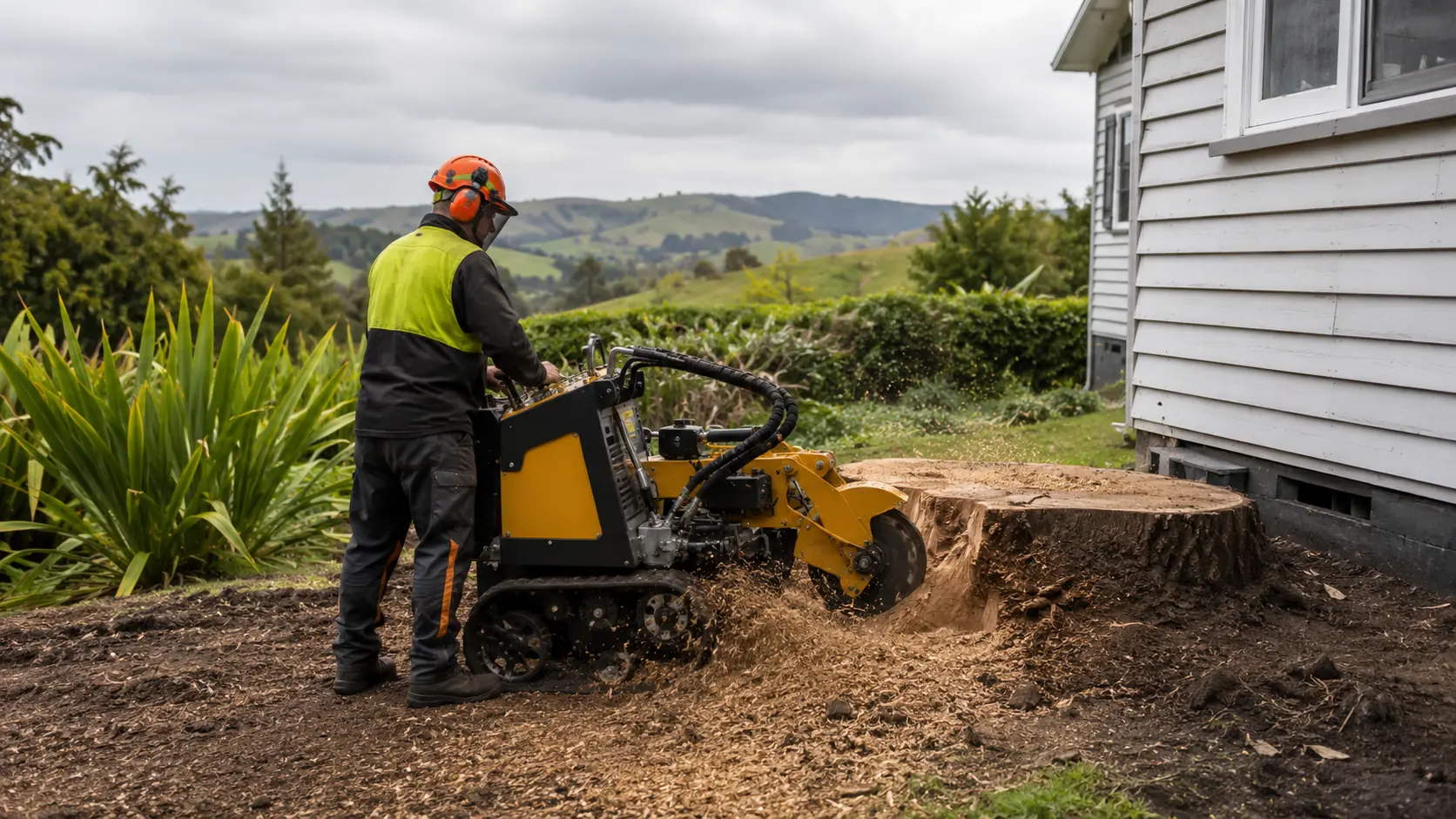
One old plum behind a side gate. Set price on your page, booked without a call, an hour on site once the setup is counted.
Follow-on from an arborist
The tree came down last week and the stump stayed. A second visit with a different machine, against a customer who already has a record.
A macrocarpa shelterbelt
A row of big stumps down a boundary with open access and a full day on the machine. Quoted by the day rather than booked off the page.
Lifestyle block clearing
Twenty stumps across a paddock, no fences in the way, and a drive that has to be worth it. Priced as a day, not as twenty jobs.
Roots lifting a path
Not a stump at all. Surface grinding before the concrete goes back, with the landscaper as the customer rather than the owner.
Narrow access down the side
Under 800mm and the big machine stays on the trailer. Asked at booking, so the day is planned around what actually fits.
Chip gone or chip left behind
A priced option ticked while booking, so the heap by the berm is something chosen and paid for rather than argued over afterwards.
A cabbage tree by the drive
Fibrous, awkward and slower than it looks. Its own band, because pricing it as an ordinary small stump loses you the morning.
Grinding before new lawn
It has to go deep enough for the grass to take. Depth is the option that moves the price, and it is settled before you arrive.
A stump out past your patch
Beyond the districts you cover, so it asks first. You weigh the drive and the number of stumps before anything lands in the diary.
How far a single stump travels.
One grind cannot pay for forty minutes each way. Set the ground you cover once and the page holds that line without you on the phone.
Pick the areas, not a circle
Coverage follows real boundaries, so the far side of the harbour does not land in your week just because it looked close.
Past the line it asks
A rural job you might take for a whole day is worth a conversation, so it arrives as a request rather than as a booking.
The second machine, its own ground
If the other operator works the other end of the district, the areas they cover are theirs to fill.
- Grey Lynn8 districts · 2 crew
- Devonport7 districts · 2 crew
- Auckland North7 districts · 2 crew
The small grind that fits tomorrow.
Open slots are scored on the driving each one adds, so a one-hour stump lands on the afternoon you are already two streets over.
Ranked, never reordered
You still choose the day. The ranking only lifts the times sitting near a job you have on already.
On every plan
This was never the part you pay for. It is how the page decides which times to put in front of someone.
Real driving, not a straight line
The scoring uses actual drive times between the addresses, and it never changes what the customer is charged.
- MSMere SolomonToday · 15:45Best+8 min
- JFJames FifitaToday · 14:30+22 min
- ARAna RangiTomorrow · 09:15+35 min
Squared up before you pack the trailer.
Most grinds are still settled on the day, and writing that down costs nothing at all. Cards are the only part sitting on Pro.
Cash and transfer are free
Mark it paid and the receipt goes out on its own, with no plan involved anywhere in it.
Cards come with Pro
For the customer who would rather tap than go hunting for account details, paid into your own Stripe account.
Stages, after the booking
Pro splits a week of clearing into a start and a finish. It happens on the job once it exists, never at a checkout.
- Hemi WalkerP-1011 · 25 Jun · Bank transfer$380
- Sarah ColemanP-1012 · 25 Jun · Cash$240
- Mere SolomonP-1013 · 28 Jun · Card$380
- James FifitaP-1001 · 27 Jun · Card$190
One app for the whole job
Everything you need to run your stump grinding business.
Starts free. Grows
only when you do.
Add your whole team and get booking for nothing.
As you grow with us you can go Pro.
Common questions.
Put it on the service as an option group: under 800mm, 800 to a metre, or open access. They pick one while booking, and the answer turns up with the job rather than on the day.
Yes. The common diameters run as set-price services that book straight in, and anything past the top band arrives as a request you price after a look.
That part stays yours. Lodge the free beforeUdig enquiry, allow the two business days it asks for, then keep the plans and the mark-out on the job and on the property for next time.
Yes. Add it as a priced option on the service. It is ticked while they book, the total moves on the page, and the sum is worked out on our side.
It does. The arborist is a customer like any other: one thread, every address they have sent you sitting on the same record, and one quote covering the three stumps at once.
Cash on the day and bank transfer are recorded by hand on the Free plan and cost nothing. Cards come with Pro, paid into your own Stripe account rather than held here.